
Last updated August 26, 2026
Free on-site gate assessment - hinges, posts, and your LiftMaster or Nice gate operator checked before anything is quoted
The assessment is free and the quote is the invoice.
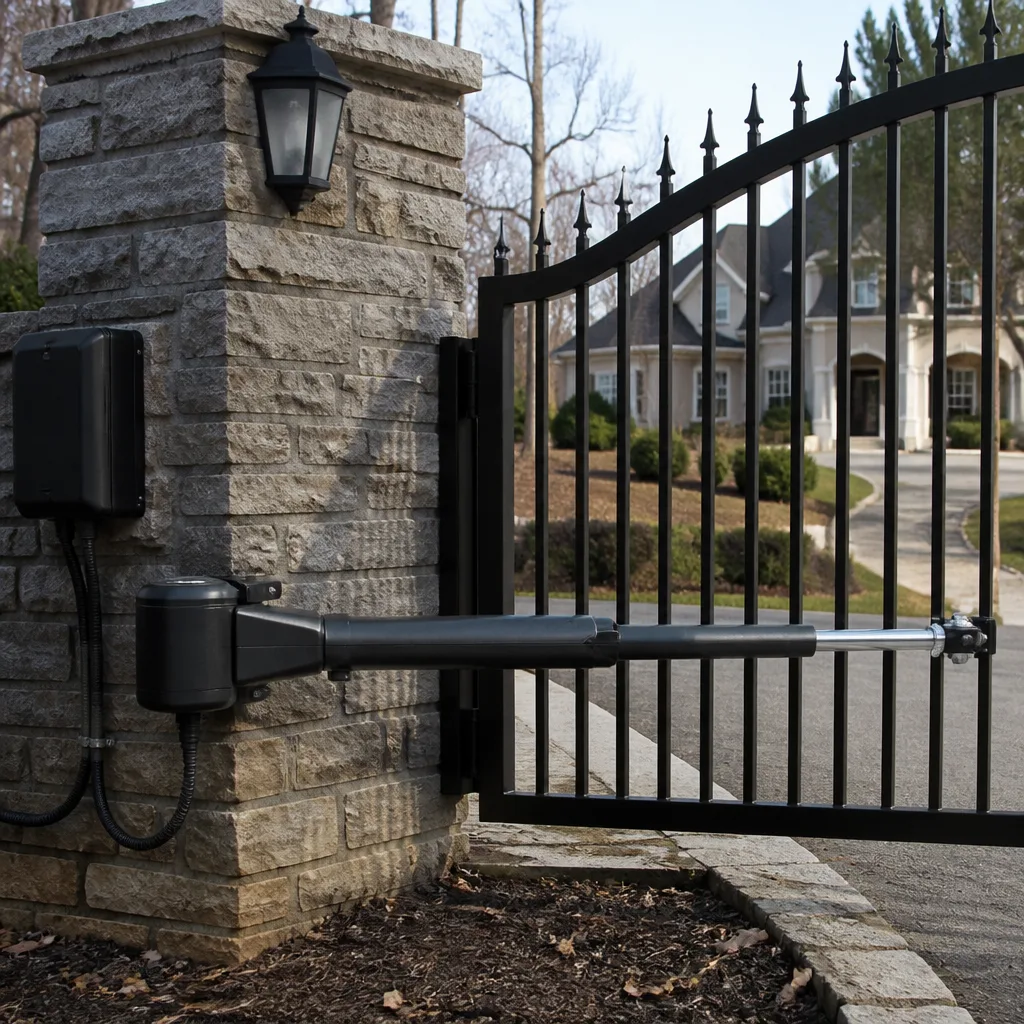
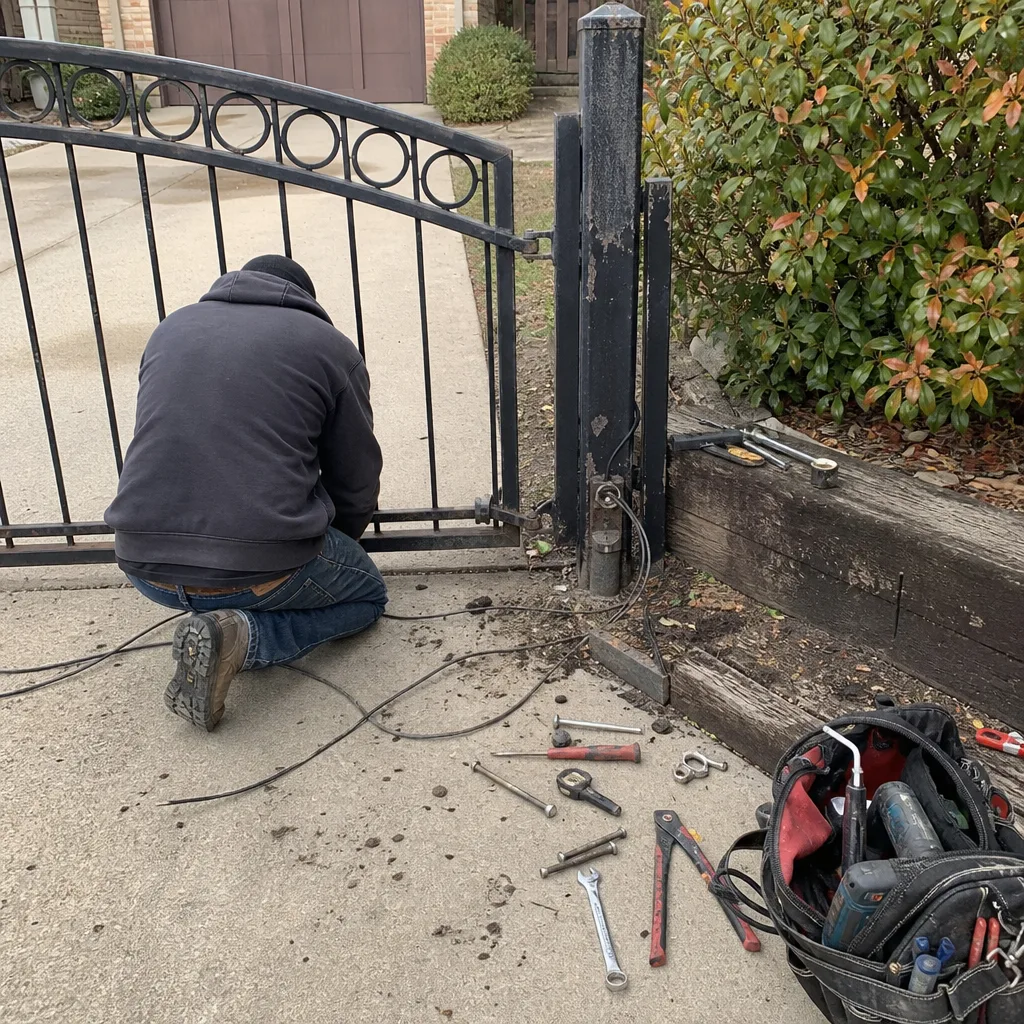 Before
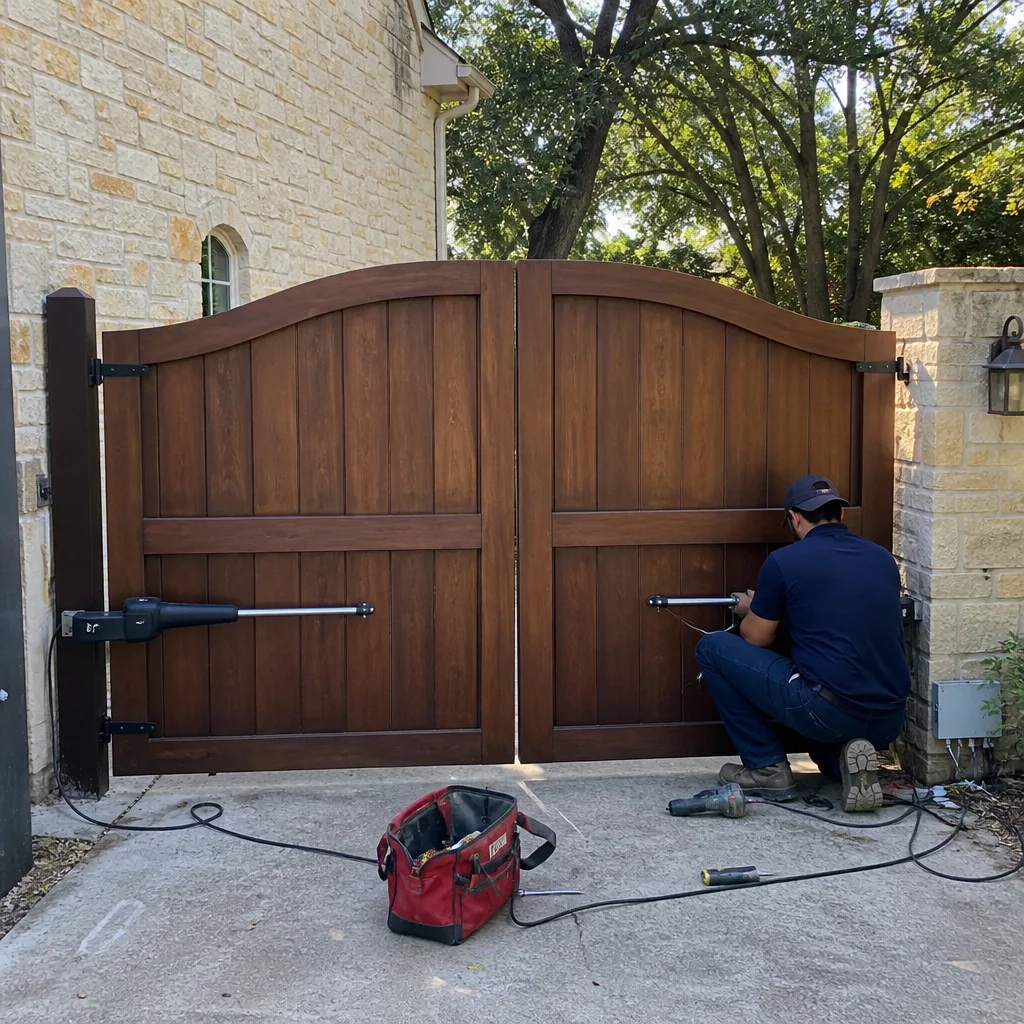 After
After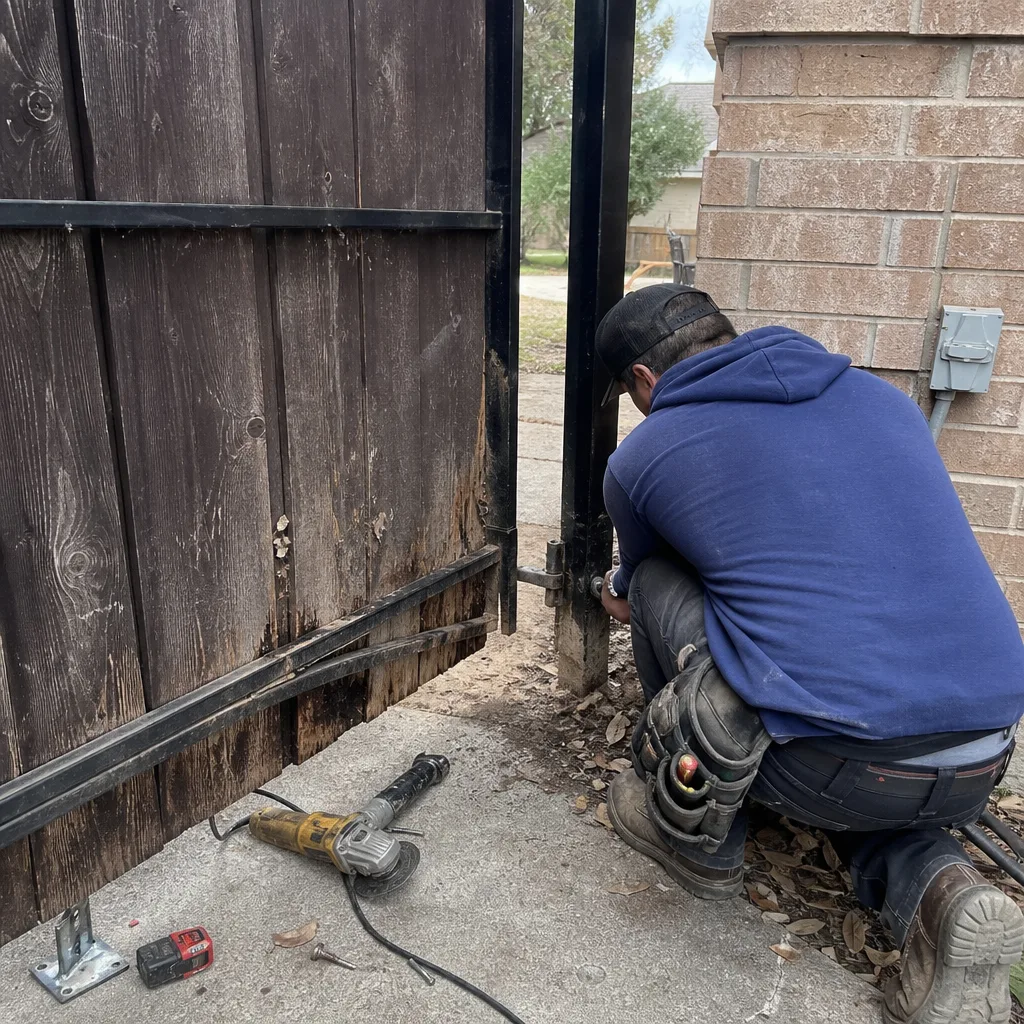 Before
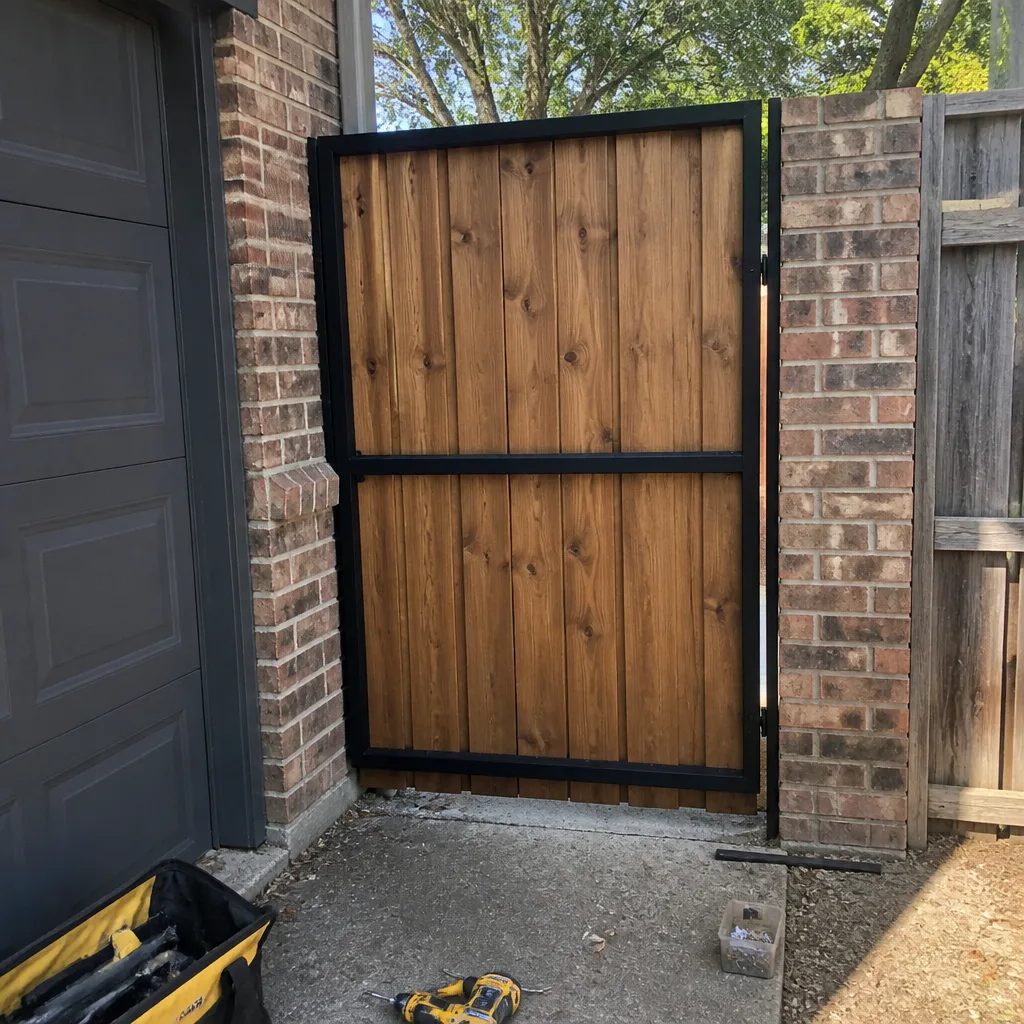 After
After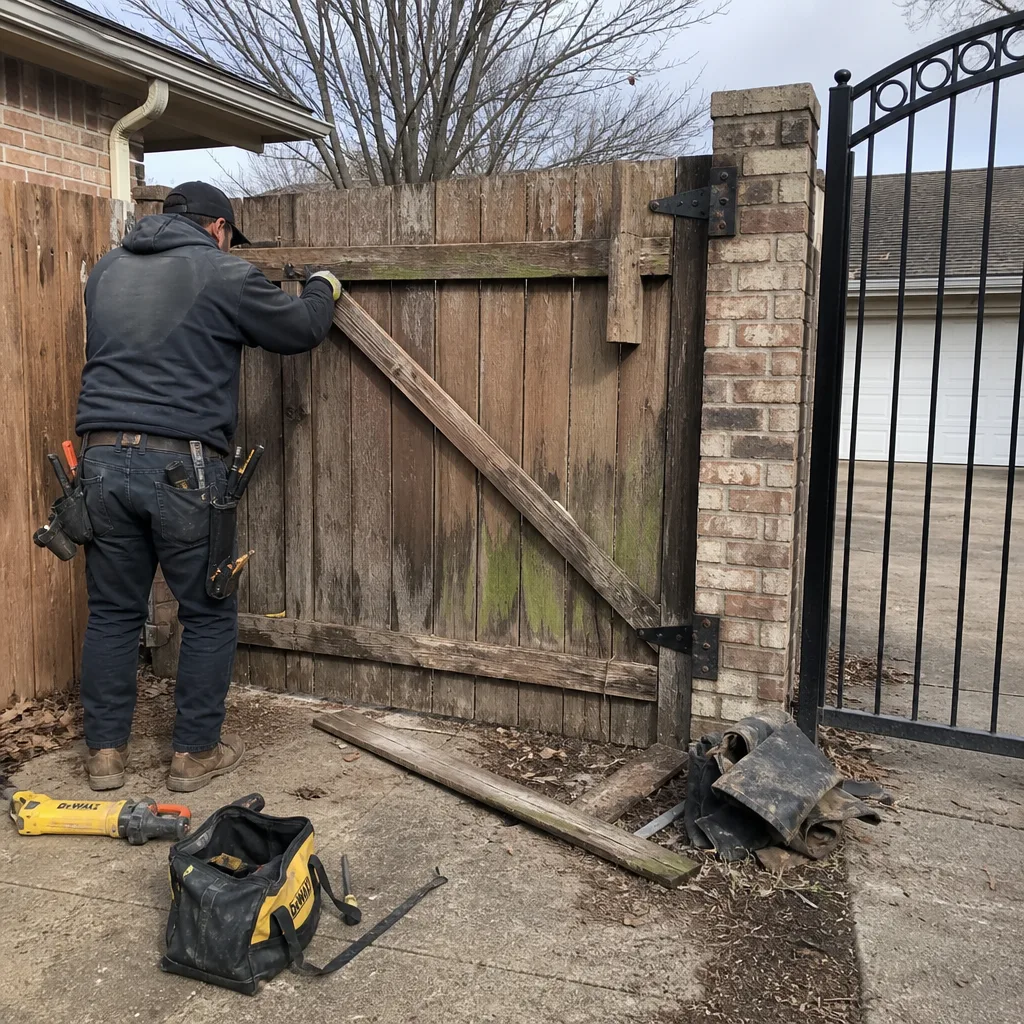 Before
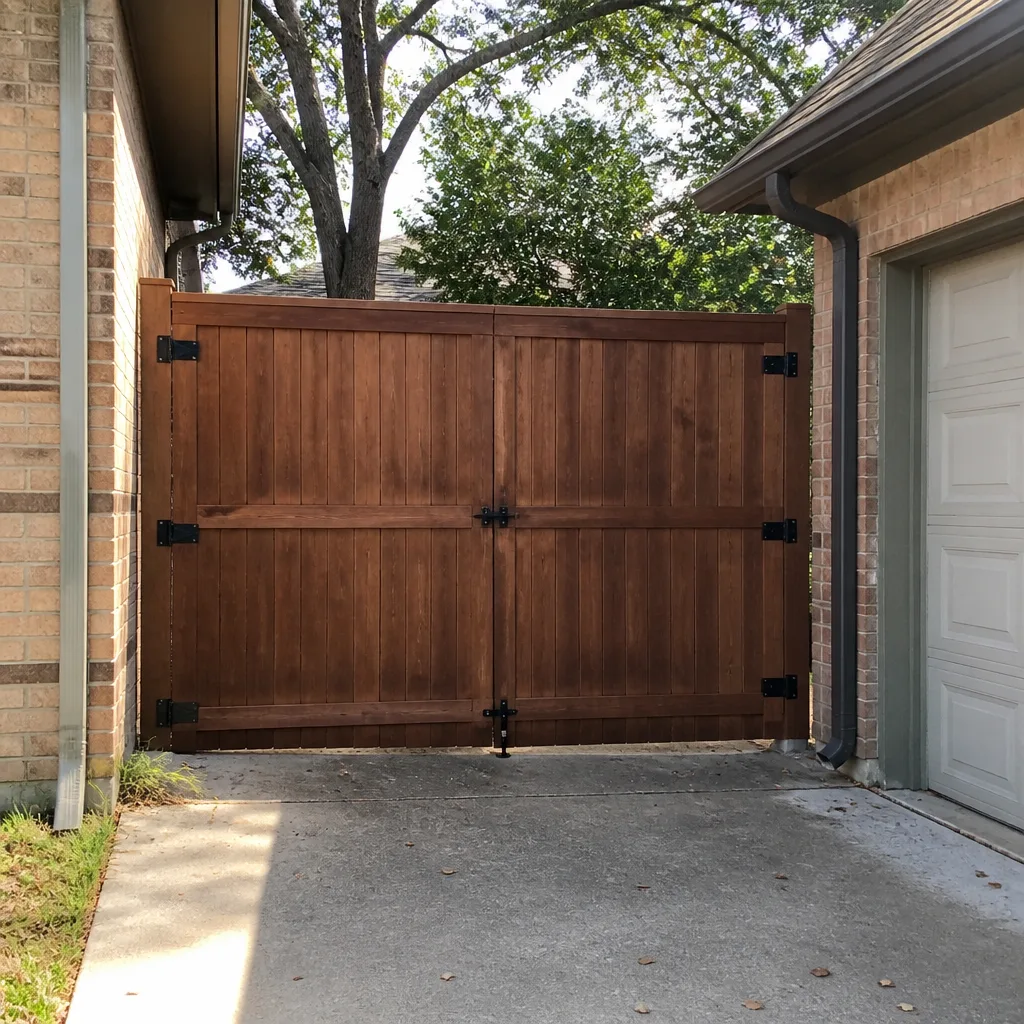 After
AfterGate Repair Permits, Codes & Inspections in TX: What You Need to Know
Here’s something that catches most Coppell homeowners off guard: the gate repair itself, the part where Hal welds a cracked hinge or replaces a sagging post, hardly ever needs a city permit. The permit trigger usually comes from the things attached to the gate - the new electrical circuit for an opener, the post set inside a regulated setback, or the masonry column that crosses from “repair” into “new structure.” This guide untangles what Coppell actually enforces versus what the state leaves alone, because paying for a permit you don’t need is annoying, but skipping one you do need can follow you to the closing table years later. For related reading, see our Gate Repair Warning Signs: A Coppell Homeowner’s Reference Guide. We’ll walk through the thresholds, the HOA layer, what inspectors actually look for, and how to recognize a contractor who’s checking versus one who’s guessing.
Quick Answer
Most gate repairs in Coppell, TX - hinge and wheel replacements, like-for-like panel fixes, opener swaps on existing circuits - require no permit at all. You’ll need a permit (or at minimum an approval) when the job involves new electrical work on a dedicated circuit, structural replacement of a post or column, or any change within a regulated setback or easement. HOA rules layer on top of city code, and a good contractor should verify both before the first cut.
Table of Contents
- What Texas State Code Says vs. What Coppell Actually Enforces
- The Repair-to-Permit Threshold: Where the Line Actually Sits
- Electrical Work on Gate Operators: The Most Common Permit Trigger
- The HOA Layer: When Your Neighborhood’s Rules Outrank the City’s
- What an Inspector Looks For (and What They Genuinely Ignore)
- The Real Liability of Skipping a Required Permit
- How a Legitimate Contractor Handles the Permit Process
- Coppell-Specifics: What We See on the Ground Here
What Texas State Code Says vs. What Coppell Actually Enforces
Texas doesn’t have a statewide gate repair permit. There’s no single document from Austin that says “gates fall under this section.” What you get instead is a patchwork: the Texas Department of Licensing and Regulation (TDLR) touches electrical work through the National Electrical Code adoption, but gates themselves are governed by local building codes, and those change from city to city. Coppell, like most Dallas-Fort Worth suburbs, adopts the International Residential Code (IRC) with local amendments. That’s the document that ultimately decides what’s a “repair” and what’s “new construction.”
Here’s how it breaks down in practical terms:
- Like-for-like repair: Replacing a bent hinge with the same size hinge, swapping a wheel, welding a crack in a steel frame. No permit. This is maintenance.
- Structural replacement: Pulling out a rotted wooden post and setting a new one in the same hole. This can require a permit, especially if the post sits near a side-yard setback or supports a fence section over 6 feet tall.
- New electrical: Running a new circuit from your panel to a gate opener that never had one before. This requires an electrical permit, full stop. It’s not negotiable.
- New construction: Building an entirely new gate assembly with new posts, new footings, new masonry columns. This is a construction permit in most Coppell scenarios, particularly for driveway gates over 6 feet in height or within required yard setbacks.
The confusion comes from the fact that most gate companies don’t want to talk about permits at all. They want to sell you the job, get it done, and move on. A gate repair that genuinely doesn’t need a permit is fine. But when you cross into electrical or structural territory, the person who told you “you don’t need a permit for this” isn’t the one who’ll be answering questions when you try to sell the house. That’ll be you, sitting at the title office, watching a lien search turn up a code violation you never knew existed. We’ve seen it happen in Coppell. It’s avoidable, but only if someone checks before the gate goes back on its hinges.
For more on what we do day-to-day around here, see the Gate Repair in Coppell page.
The Repair-to-Permit Threshold: Where the Line Actually Sits
Here’s the rule of thumb that will serve you better than any codebook: if the repair leaves the gate exactly where it was, doing exactly what it did, with the same footprint and the same electrical load, you’re almost certainly fine without a permit. If the repair changes the structure, the height, the location, or adds electricity where there was none, you need to check.
Let’s put numbers on it. In Coppell, the most common trigger points are:
- Gate height over 6 feet. Driveway gates in newer Coppell subdivisions often run 6 to 8 feet tall. Anything at or above that height, with any structural change, typically requires a permit. A purely cosmetic repair - like repainting or replacing surface hardware - doesn’t.
- Post replacement within 25 feet of the front property line. Coppell’s front-yard and side-yard setbacks are where the city gets particular. If your gate post lives inside that setback and you’re pulling the old one out of the ground, that’s a permit conversation. If you’re just reinforcing the existing post with a steel sleeve and concrete collar, it’s still a repair.
- New footings or concrete work. Pouring a new concrete pad for a slide gate track, or new footings for a replacement post, can trigger a permit. The city wants to know about new concrete near property lines and easements.
- Any change that alters the gate’s swing direction or footprint. If the gate used to swing inward and you’re flipping it to swing outward over the sidewalk, that changes the right-of-way and requires city approval, not just a permit.
What we tell people in Coppell is this: a sagging gate that we fix by welding and resetting the existing hinges doesn’t need a permit. A gate that’s so far gone we’re cutting the posts out at grade level and pouring new footings - that one probably does, or at least deserves a phone call to the city before we start. A gate sags in the hinge post, not in the middle, and that’s where we start. The fix, not the whole gate, is usually what’s under the microscope.
If you’re in that gray zone and want a straight answer without paying a consultant, give us a call. Hal will tell you what he’d do on his own house.
Electrical Work on Gate Operators: The Most Common Permit Trigger
If there’s one thing that catches Coppell homeowners more than any other, it’s the opener. You called about a dead gate motor. We come out and find the motor’s fine but the circuit feeding it is fried, or worse, there was never a dedicated circuit at all - the last guy ran an extension cord underground or tapped into a garage outlet that wasn’t rated for outdoor use. That’s not a repair. That’s new electrical work, and in Coppell, new electrical work needs an electrical permit and a rough-in inspection before the trench gets buried.
Here’s what the electrical permit actually covers on a gate job:
- Circuit sizing: A gate opener needs a dedicated circuit rated for outdoor use, with the right gauge wire for the run length. Too small a wire over a long run, and the motor voltage drops, runs hot, and dies early. An inspector checks the wire gauge against the run distance.
- Grounding and bonding: Metal gates and metal posts around electrical equipment have bonding requirements. This is the part most DIY and fly-by-night installers skip. It’s also the part an inspector will actually check.
- GFCI protection: Outdoor receptacles and circuits require GFCI protection. On a gate opener, that’s a specific code requirement, and it’s there because water and electricity and metal gates are a bad combination.
- Burial depth: Direct-burial cable or conduit in a trench has a minimum burial depth. In most of Texas that’s 18 to 24 inches, depending on the wiring method. An inspector wants to see the trench before it’s backfilled.
- Disconnect means: There should be a service disconnect for the opener - a way to kill power at the gate without walking back to the main panel. Some installations get this wrong. An inspector will flag it.
- Gate style and material: Many newer neighborhoods have approved gate styles. If your iron gate rotted and you want to replace it with a wood gate, the city may not care but the HOA almost certainly will.
- Height and setback consistency: Your HOA may have stricter setback rules than the city. A gate that’s fine under Coppell code might violate your neighborhood’s specific covenant.
- Color and finish: It sounds trivial, but I’ve seen HOA boards hold up a gate replacement over the wrong black - matte versus gloss.
- Automation and hardware visibility: Some HOAs restrict where an operator arm can mount, or whether the control box can be visible from the street.
- Footing depth and post embedment: In North Texas clay soil, which expands and contracts dramatically with moisture, post depth matters. An inspector wants to see posts set below the frost line (which is shallow here, usually 12 to 18 inches) but more importantly, sized and embedded to handle the gate’s weight and wind load. A 6-foot gate on a 2-foot post is a problem.
- UL-listed components: Openers, photocells, edge sensors - the inspector wants the branding and the listing visible. Generic off-brand safety equipment may not pass.
- Entrapment protection: This is the big one for automatic gates. Texas adopts the UL 325 standard for gate operators. That means the gate must have external entrapment sensors - photo eyes at the very least, and in many cases pressure-sensitive safety edges. An inspector who sees an automated gate with no entrapment protection will fail it, and rightly so.
- Electrical connections: Junction boxes, wire nuts, conduit runs. The inspector wants to see weather-tight connections. A wire nut wrapped in electrical tape and left in a puddle is a failure.
- Whether the gate closes perfectly straight at the latch.
- Whether the welding looks pretty.
- The color mismatch between the patch paint and the original finish.
- Minor wear on rollers or hinges that’s not a present safety issue.
- At the closing table. When you sell the house, the buyer’s title company runs a search. In many cases, a title company will ask about unpermitted work specifically - sometimes as a direct question, sometimes as a general disclosure. If the unpermitted gate work included electrical or structural changes, it can become a required repair, a price concession, or in the worst case, a deal-killer. Gates are low on the title company’s list if it’s a hinge replacement. They rise up the list if it’s a new operator circuit or a relocated driveway gate.
- On an insurance claim. Suppose the gate never got its permit, and then a storm knocks it over onto a neighbor’s fence, or the opener malfunctions and damages a car. The insurance adjuster reviews the paperwork. No permit, no inspection, possibly a coverage dispute. That’s not hypothetical. Adjusters look for reasons, and an unpermitted installation is a reason.
- In a neighbor dispute. This is the most common one in Coppell. The gate got moved, the setback got violated, the new post ended up four inches over the property line. The neighbor notices. The neighbor calls the city. The city sends out code enforcement. Now you’re not just fixing the gate - you’re filing for a retroactive permit, paying a penalty, and dealing with a neighbor who’s now got a screenshot of the original property survey. It’s not that the city goes hunting. It’s that the neighbor does.
- On the next repair. When a different contractor comes out later and asks “who did that?” and you say “some guy, I don’t remember,” that contractor knows the work probably wasn’t inspected. That’s not a dig at you. It’s a signal that opens a whole can of questions about what else was skipped.
- They tell you the truth before you ask. A legitimate contractor knows the code. They know whether your specific repair crosses the threshold. And they tell you upfront, even if it means the job takes a few days longer and costs a bit more. The guy who says “permits aren’t necessary for this kind of work” without checking a single thing is a guy who’s hoping you won’t ask follow-up questions.
- They pull the permit in their name, not yours. The licensed contractor should be the one listed on the permit application. That means when the inspector shows up, they’re looking at a permit tied to a license, not to a homeowner who’s expected to know what he doesn’t know. If a contractor asks you to pull the permit as the homeowner, that’s a red flag. It means they’re either not licensed to pull it, or they don’t want their name attached to the job.
- They schedule the inspection and are there for it. The contractor schedules the inspection, meets the inspector, walks the job, and answers questions. You shouldn’t be the one standing in the driveway trying to explain a bonding requirement you’ve never heard of.
- They close the permit. A permit isn’t done when the inspector leaves. It’s done when the city marks it final. That’s the paperwork that matters at the closing table. A good contractor closes it out and hands you the final sign-off.
- They document everything. Photos of the trench before backfill, photos of the post embedment before concrete, photos of the final install. If the city ever asks a question three years later, you can answer it from a folder instead of a memory.
- The clay soil matters. North Texas clay shrinks in summer and swells in spring. Gate posts set too shallow move. This isn’t a code line item per se, but it affects what an inspector tolerates. In areas of Coppell with heavy clay, we over-dig post holes and pour a wider footing than code minimums, not because the inspector requires it, but because we’ve seen what happens when you don’t.
- Side-yard setback enforcement has gotten tighter. In parts of Coppell with zero-lot-line subdivisions, the distance between houses is narrow, and the city is increasingly particular about gate placement within side-yard setbacks. What passed a decade ago may not pass now.
- HOA density is high. There are few areas of Coppell without an HOA. That’s not a complaint - it’s a fact. And it means the HOA step in the process isn’t optional. We’ve done jobs where the city approved the permit in days, and the HOA took three months to approve a simple gate panel change because their architectural committee met only once a month.
- Most gate repairs here genuinely don’t need permits. This is the part that surprises people. The majority of our repair calls - sagging gate, broken wheel, dead opener on an existing circuit - sail right through with no permit needed. The city’s not trying to catch you. It’s trying to catch the stuff that creates real liability, and that’s a shorter list than most homeowners fear.
We work with operators from FAAC, BFT, and Linear regularly, and the electrical requirements are similar across brands - a dedicated circuit, proper grounding, and a weather-protected connection at the motor. The brand doesn’t change the code. The code is the code.
For gate motor specifics, take a look at Gate Motor & Opener in Coppell.
The HOA Layer: When Your Neighborhood’s Rules Outrank the City’s
Coppell is full of master-planned communities. That’s a blessing and a curse. The blessing is the neighborhoods are well-kept. The curse is the HOA. And here’s the thing most people miss: your HOA can require approval for a gate repair or replacement that the City of Coppell doesn’t care about at all. The city might say “no permit needed for like-for-like replacement.” Your HOA architectural committee might say “that gate style is discontinued, and you need to submit an application before you change anything.” Two different rulebooks. Both of them apply.
HOA rules in Coppell communities typically cover:
Here’s the sequence that actually works: check the city first, then the HOA, then start the job. Skip the HOA approval, and you’ll get a letter. Ignore that letter, and the HOA can fine you monthly until it’s fixed. That’s not a code-enforcement issue - that’s a private contract issue - and it can be more expensive and more stubborn than any city permit problem. We’ve watched neighbors in Coppell spend more on HOA fines than the gate repair would have cost if they’d filed the two-page application upfront. For How to Hire a Gate Repair Contractor in Coppell: A Step-by-Step Guide, see our detailed walkthrough.
None of this is legal advice. It’s just what we’ve seen, and what we tell people to check before the welding starts.
What an Inspector Looks For (and What They Genuinely Ignore)
Here’s a truth that’ll save you time and anxiety: most homeowners over-prepare for the wrong things. They think the inspector cares about the gate’s appearance, the paint job, whether the latch is centered. They don’t. City inspectors in Coppell care about three things on a gate job: structure, safety, and electrical. The rest is noise.
What an inspector actually looks at:
What an inspector typically ignores:
Show me the gate closing on its own and I’ll show you where it’s failing. That’s the kind of thing we fix before an inspection, not because the inspector asked, but because a gate that fails after inspection is a callback we don’t want. We’d rather the gate work right the first time. That’s been the standard since the start in 2001.
The Real Liability of Skipping a Required Permit
Let’s talk about the thing nobody wants to talk about. The permit you skipped in 2019 because the gate guy said “we don’t need to bother with that for this kind of work” - that permit comes back. Here’s where it shows up:
None of this means you need a permit for everything. Most of what we do - hinge repairs, wheel replacements, welding cracks, opener swaps on existing circuits - genuinely requires no permit. The key is knowing which side of the line you’re on before the work starts, and having a contractor who’ll tell you straight instead of telling you what’s convenient.
How a Legitimate Contractor Handles the Permit Process
The difference between a legitimate gate contractor and a chuck-in-a-truck isn’t the price. It’s the process. Here’s what a proper process looks like on a gate job where permits may be involved:
We’ve been doing this in Coppell and the surrounding towns since 2001. The name is on the shop, and the shop is down the road - that is the oldest accountability there is. Hal’s crew pulls the permits, meets the inspectors, closes out the paper, and hands you the folder. That’s the job.
If you’re planning a replacement rather than a repair, you may also want to read Gate Installation in Coppell.
Coppell-Specifics: What We See on the Ground Here
Coppell isn’t Dallas. It isn’t Irving. It has its own code office, its own inspectors, and its own particular flavor of enforcement. Here’s what we’ve learned doing gate work here for more than two decades:
If you want to know whether your specific gate situation needs a permit, call us and ask. Hal will tell you what he’d tell his own neighbor: the straight answer, even if the straight answer is “you don’t need to spend money on a permit for this.” We’d rather you know than wonder.
Common Mistakes to Avoid
- Trusting “you don’t need a permit” without a reason. A lot of people say that because it’s easier than checking. Ask specifically: “Is this like-for-like, or does it change the structure or electrical?” If they can’t answer that, they haven’t checked.
- Skipping the HOA approval because the city didn’t require a permit. Two different rulebooks. The city doesn’t enforce HOA covenants, but the HOA enforces them with fines. In Coppell, this is the most common post-job headache we see.
- Burying the electrical trench before the rough-in inspection. The inspector won’t pass what he can’t see. Once the inspector’s missed it, you’re digging it up again or running conduit above ground like a temporary fix that becomes permanent.
- Running an opener off an existing garage circuit that’s not rated for it. This is the most common electrical shortcut in DFW gate work. It works for a while, then the breaker trips, or the motor runs hot, or the wire insulation fails underground. The repair costs more than the correct electrical run would have.
- Replacing a post without checking the setback. In Coppell’s tighter lots, a post four inches closer to the property line than the old one can violate a side-yard setback. You won’t know until the neighbor surveys or the city comes out.
- Not getting the final sign-off. The inspection happened, the inspector nodded, but the permit was never marked final. Six years later, at closing, that open permit shows up. Close the loop. Get the paper.
When to Call a Professional
Call someone who knows the code when you’ve got: an automatic gate that’s losing power repeatedly, a post that’s visibly leaning in clay soil, a gate you want to relocate or widen, any new electrical run to an opener, or an HOA letter sitting on your counter that you don’t fully understand. These are situations where the wrong guess costs you money and time.
Gatewood Fence & Gate offers free estimates in Coppell - call (903) 829-4499. Even if you just want to ask whether your repair crosses the permit line, Hal will give you a straight answer without charging for the conversation. The name’s on the shop, and the shop’s down the road.
Frequently Asked Questions
Most gate repairs in Coppell - hinge replacement, wheel replacement, welding a crack, swapping an opener on an existing dedicated circuit - do not need a permit. The work crosses into permit territory when it involves new electrical circuits, structural post replacement within regulated setbacks, gate height changes, or footprint changes.
A repair leaves the gate where it is, doing what it did, with the same footprint and the same electrical load. A replacement changes one of those things - new post locations, new operator circuit, new structural columns. In Coppell, that is generally where the city stops treating it as maintenance.
Yes, if you’re running a new dedicated circuit from your panel to the gate, you need an electrical permit and a rough-in inspection before the trench is backfilled. Swapping an opener like-for-like on an existing, properly permitted circuit does not require one.
A licensed contractor should pull the permit in their own name. If a contractor asks you to pull it as the homeowner, that’s often a sign they can’t or won’t take code responsibility for the work. Insist on the contractor’s name on the application.
Your HOA can require approval for gate styles, materials, heights, and finishes even when the city requires no permit at all. Skipping the HOA approval can trigger monthly fines that continue until the issue is resolved. Check the HOA before the work starts, not after the letter arrives.
Unpermitted structural or electrical work can surface during a title search or buyer’s inspection. It can become a required repair, a price concession, or in some cases a deal-killer. Like-for-like repairs rarely trigger this. New electrical circuits and relocated gates are the ones that tend to cause problems at closing.
The Bottom Line
Gate repair permits in Texas are not as complicated as the fear around them, and not as optional as the guys trying to avoid them make them sound. In Coppell, most repairs pass through with no permit at all. The ones that need a permit are the structural and electrical jobs - the things that can follow you to a closing table or an insurance claim if they’re done blind. And the HOA layer, where it exists, runs parallel to city code, not underneath it. The right move is almost always the same: ask someone who actually knows, check the city and the HOA before you start, and keep the paper. Browse our more guides & resources for additional Coppell-specific advice. Hal’s been doing this since 2001, and he’d rather give you the straight answer than sell you something you don’t need.
For anything else gate-related, start at the Gatewood Fence & Gate home page or call (903) 829-4499 - a live person answers, around the clock.
Written by Hal Gatewood, Owner at Gatewood Fence & Gate, serving Coppell since 2001.