
Last updated August 26, 2026
Free on-site gate assessment - hinges, posts, and your LiftMaster or Nice gate operator checked before anything is quoted
The assessment is free and the quote is the invoice.
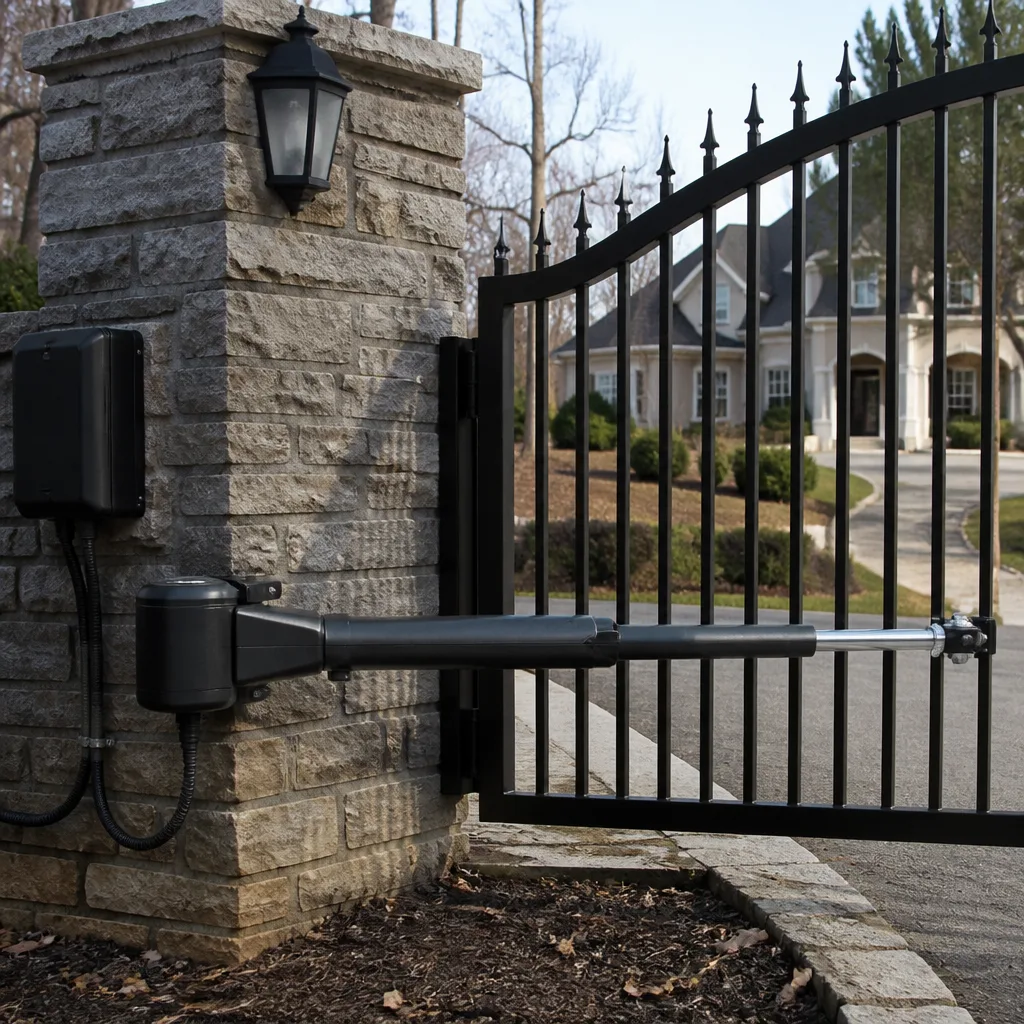
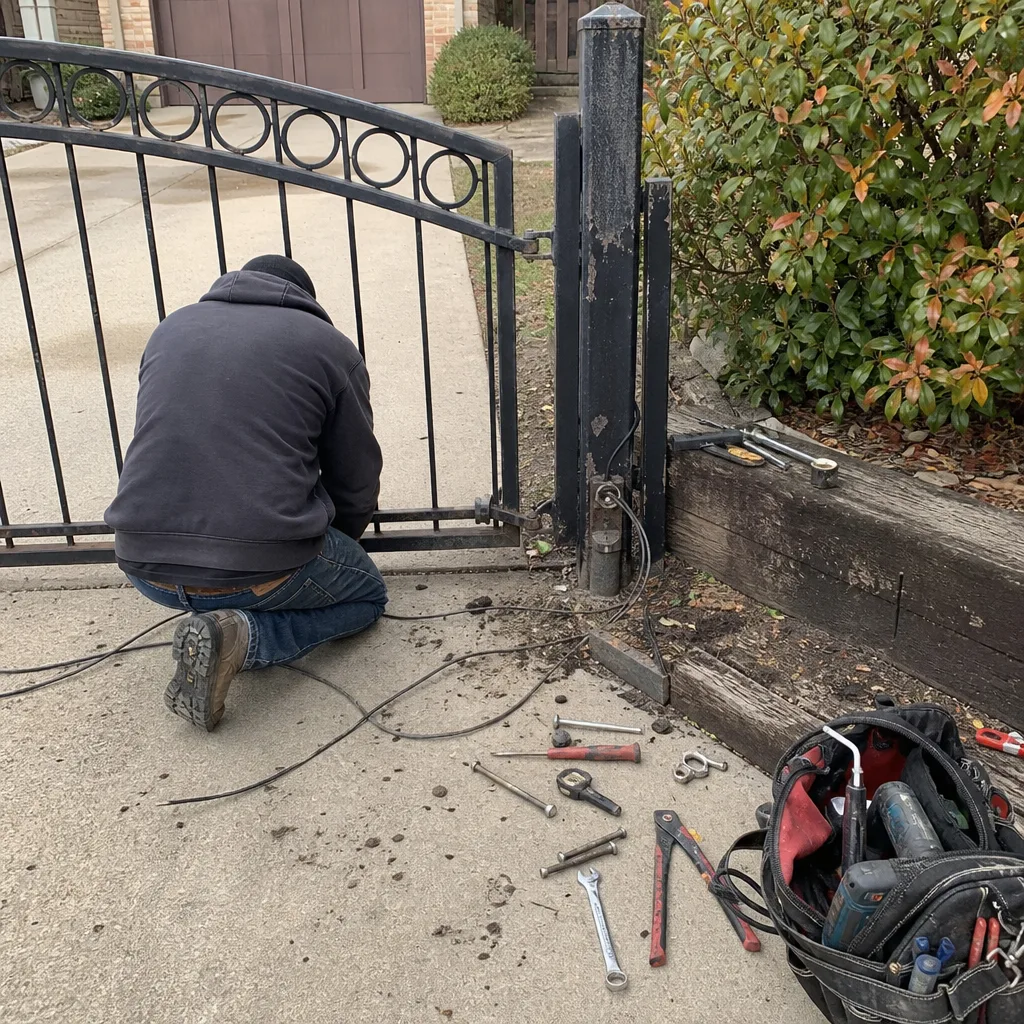 Before
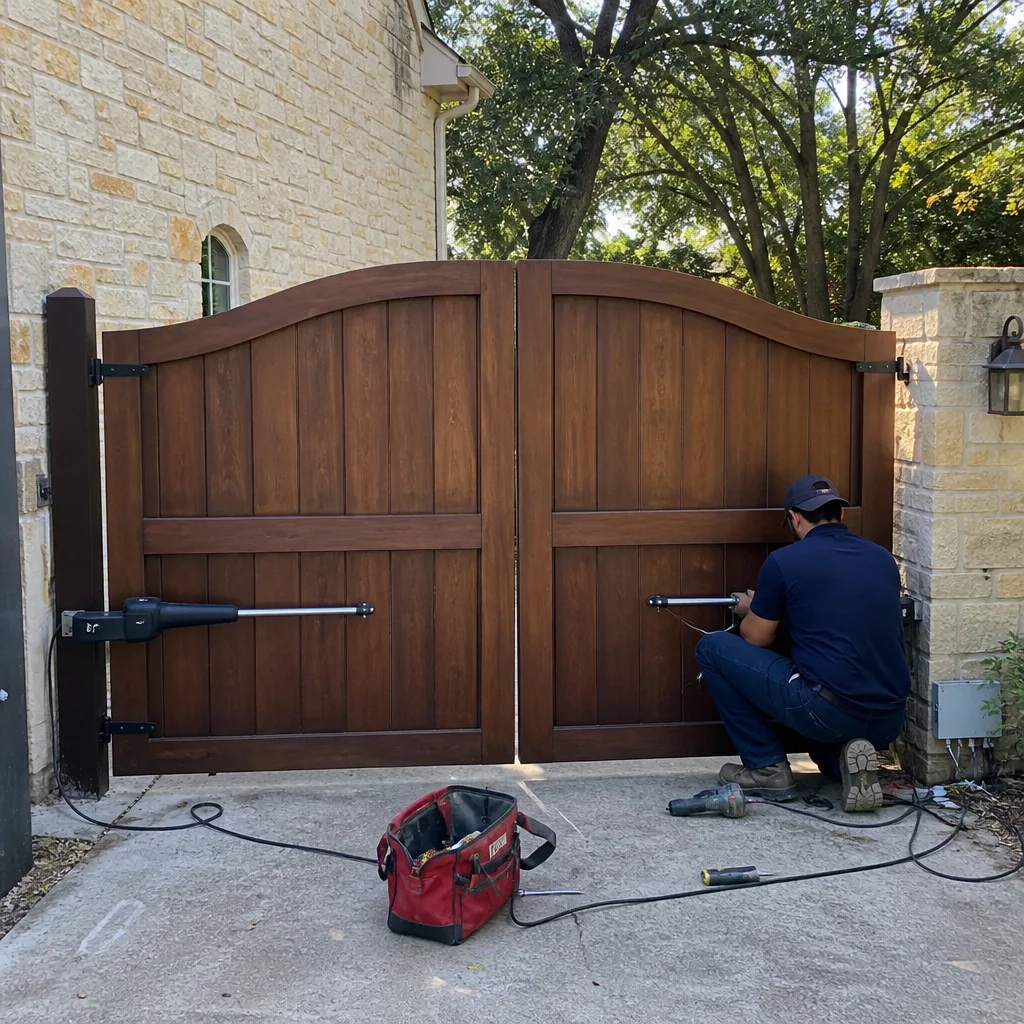 After
After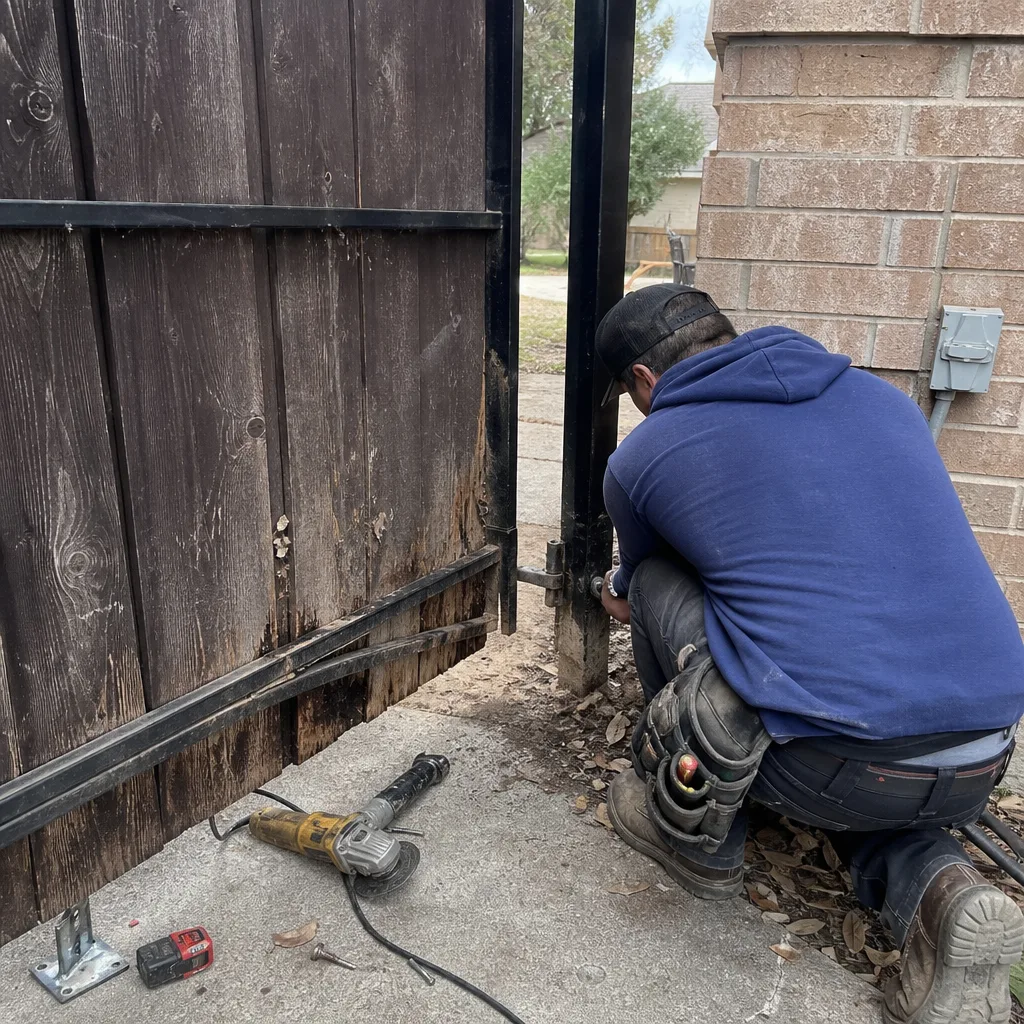 Before
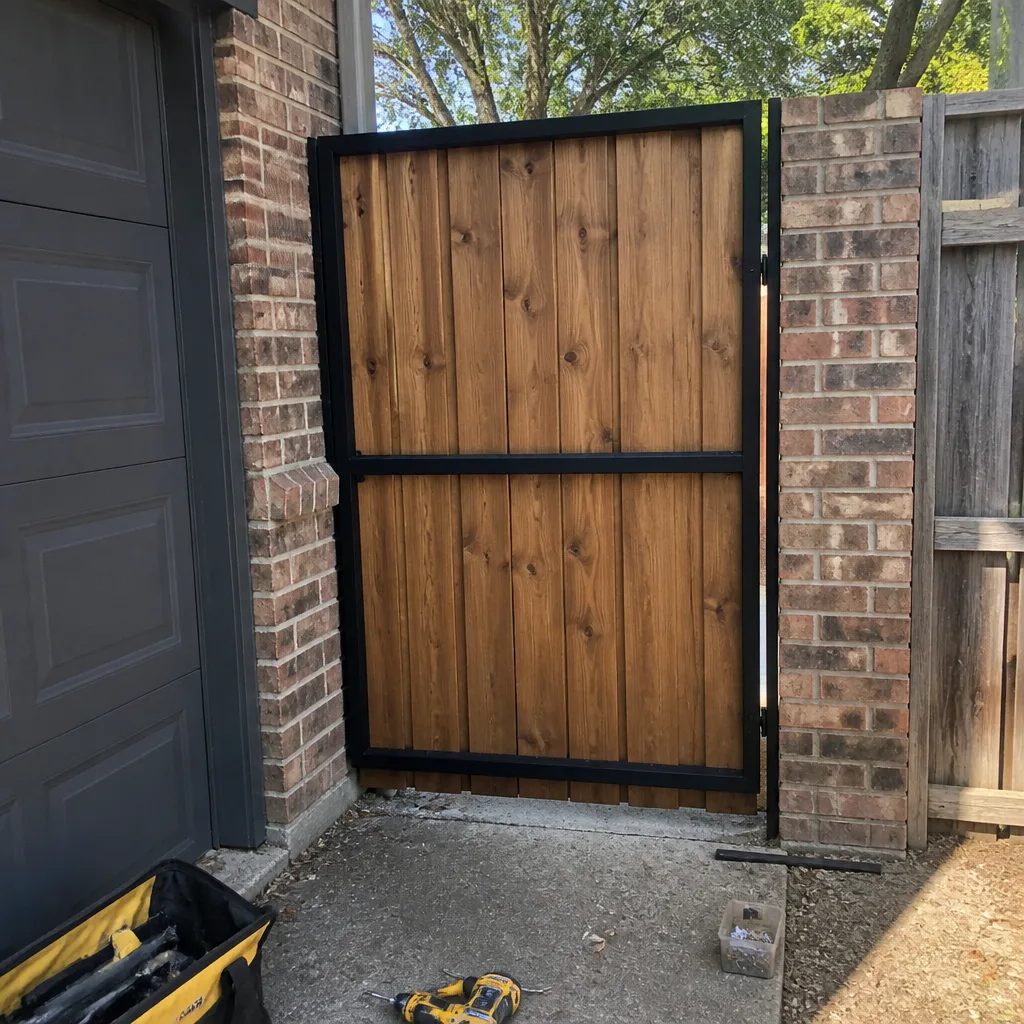 After
After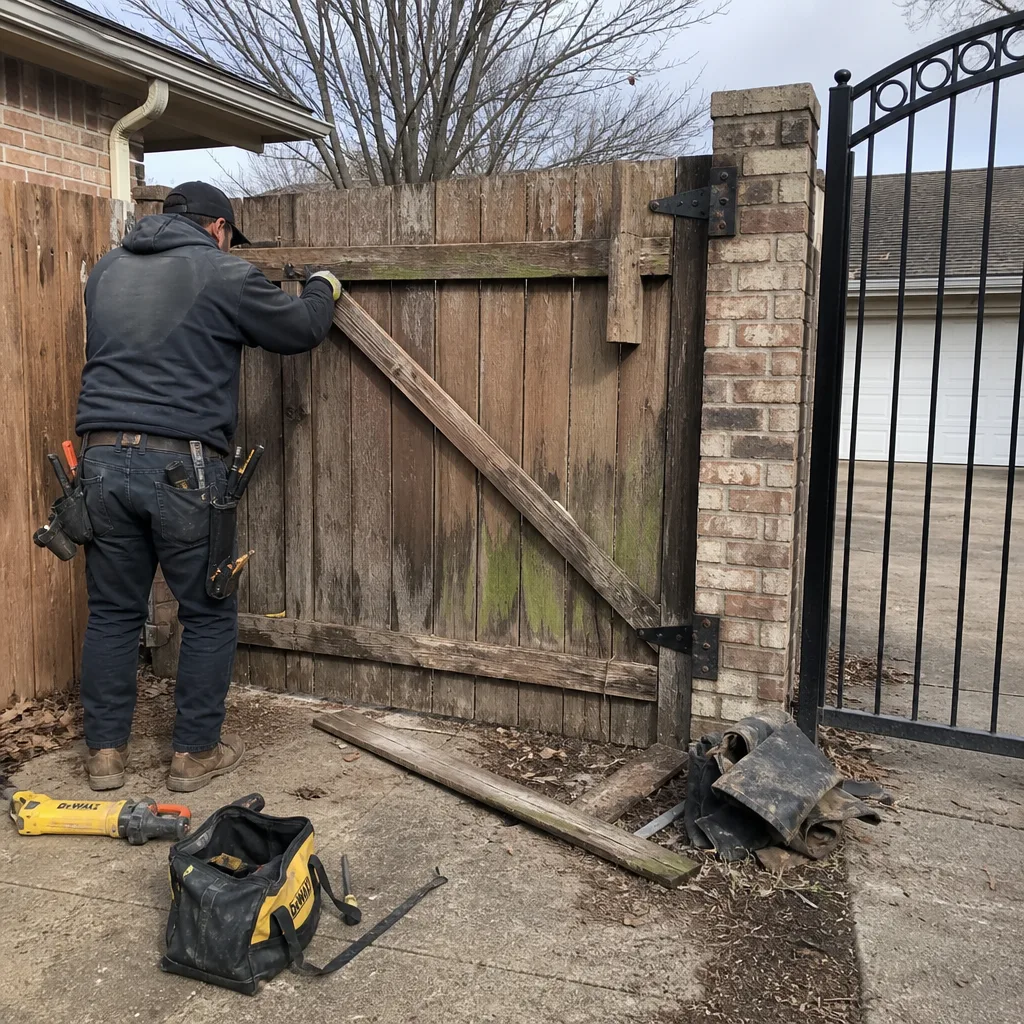 Before
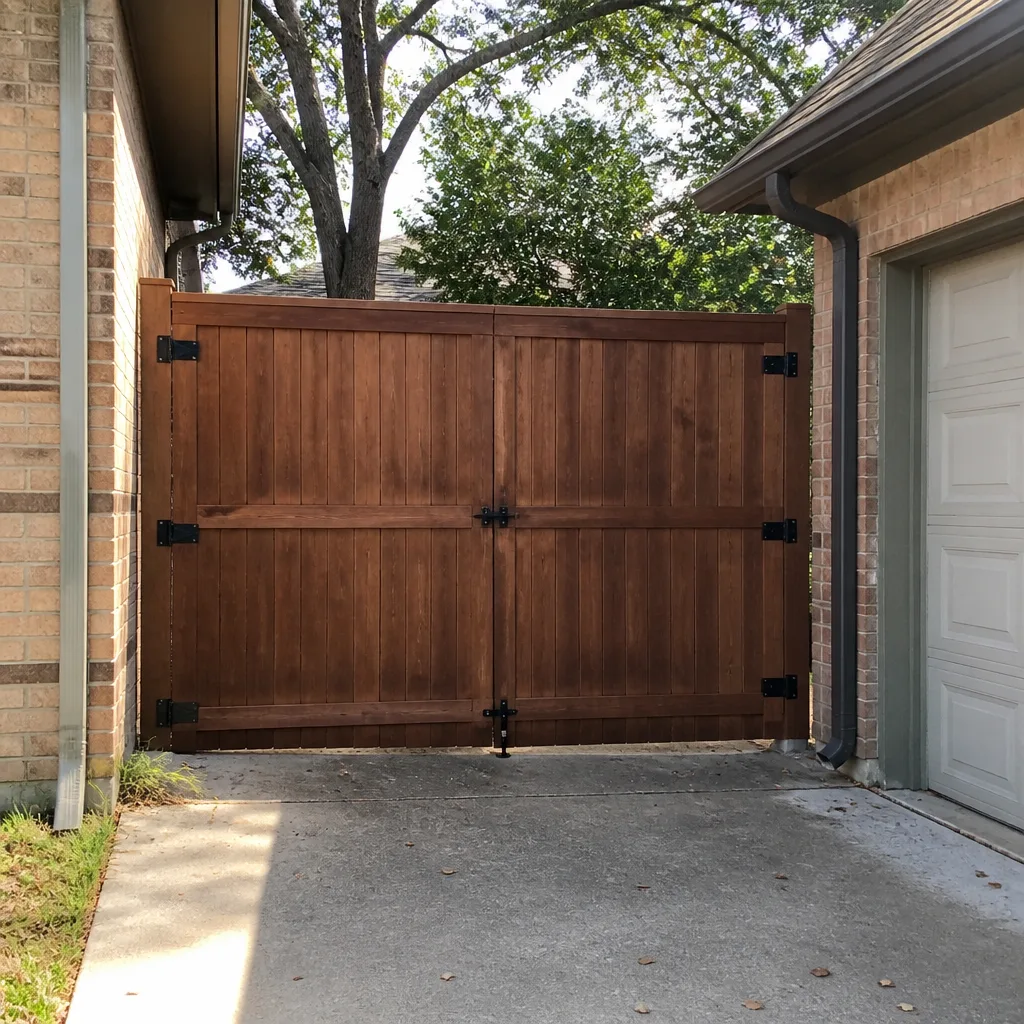 After
AfterGate Repair Warning Signs: A Coppell Homeowner’s Reference Guide
Most gate failures in Coppell don’t happen without warning. They announce themselves weeks, sometimes months, before the gate actually quits. The problem is that most homeowners don’t know how to listen. A gate that hesitates for two seconds before moving isn’t “just slow.” It’s drawing excess current to overcome a mechanical problem, and every cycle like that is shortening the operator’s life while you wait to see if it gets worse. Over 24 years of Gate Repair in Coppell, we’ve learned that the homeowners who catch these signals early spend a few hundred dollars on a repair. The ones who don’t spend a few thousand on a replacement. This guide teaches you to read those signals in plain terms, so you can make the call at the $200 repair stage instead of the $1,400 emergency replacement stage.
Quick Answer
The most common gate repair warning signs in Coppell are a gate that sags or drags on the ground, a motor that hums but doesn’t move the gate, grinding or clicking noises during operation, a gate that reverses on its own, shrinking remote range, and rust at the hinge or post base. If you notice any of these, schedule a repair visit before the gate fails completely. Most of these issues cost under $300 to fix when caught early and over $1,200 when ignored.
Table of Contents
- Sound Warnings: What Your Gate Is Telling You
- Visual Warnings You Can Spot From the Driveway
- Behavioral Warnings in Automated Gates
- Urgent Warnings vs. Ones That Can Wait a Few Weeks
- The Photo-and-Note Method for Tracking Warning Signs
- What Coppell’s Climate and Soil Do to Gates
- Common Mistakes to Avoid
- When to Call a Professional
- Frequently Asked Questions
- The Bottom Line
Sound Warnings: What Your Gate Is Telling You
A gate that’s starting to fail almost always makes noise first. The trick is knowing which noise points to which problem, because they’re not interchangeable. Grinding, clicking, and humming are three distinct sounds with three distinct mechanical causes. Once you know what each one means, you can describe it accurately over the phone and get a faster diagnosis. In Coppell, where we get everything from July heat to January cold snaps, these sounds often show up seasonally as metal expands and contracts.
The Grinding Noise
A grinding sound during gate movement almost always points to a bearing problem, a wheel problem, or metal-on-metal contact somewhere in the track or hinge assembly. Bearings wear out. Wheels flatten on one side. The gate starts dragging slightly, and the motor strains to push it. That strain produces the grinding. On a sliding gate, we often find the drive chain has lost tension and is skipping across the sprocket teeth. On a swing gate, the hinge bearings have dried out and are chewing themselves up. The fix at this stage is usually a bearing replacement or wheel replacement, typically in the $150 to $250 range for parts and labor in Coppell. If you let it grind for six months, the motor burns out trying to overcome the resistance, and now you’re looking at a motor replacement too. That’s the $800 to $1,200 job that could have stayed a $200 job. Gate repair in Coppell catches this early so the operator doesn’t follow the bearing into the scrap pile.
The Clicking Noise
Clicking is different from grinding. A click is a sharp, distinct sound, often repeated rapidly. On automated gates, a rapid clicking when you press the remote or keypad usually means the operator’s capacitor or control board is trying to engage but can’t complete the circuit. On some systems, a single click followed by nothing means the limit switch has failed and the motor doesn’t know where to stop or start. On manual gates, clicking often comes from a latch that isn’t fully seating or a hinge pin that’s worked loose and is shifting under load. We’ve worked on Ghost Controls and Mighty Mule systems where a clicking sound was the first sign of a failing capacitor, a $40 part when caught early. Left alone, a bad capacitor takes the control board with it, and that’s a $300 to $500 repair on most brands. The pattern is always the same: the sound is cheap to diagnose, expensive to ignore.
The Humming Noise
A humming noise with no gate movement is the sound of a motor getting power and doing nothing with it. On electric gate operators, this almost always means the motor is running but the drive mechanism isn’t engaging. Sometimes it’s a stripped gear inside the operator. Sometimes it’s a key that sheared on the drive shaft, a deliberate weak point designed to fail before the motor does. On hydraulic operators, humming often means low fluid or a pump that’s cavitating. In Coppell’s summer heat, we see more humming complaints than any other season, because heat thins hydraulic fluid past its operating spec. The important thing about a humming gate is to stop running it. Every time you press the button and hear that hum, the motor is building heat without doing work. That’s how windings melt. Kill the power to the operator and call for service. This is one warning sign where continued use actively makes the repair more expensive.
Visual Warnings You Can Spot From the Driveway
You don’t need to be a gate mechanic to read visual warning signs. Most of them are visible from 20 feet away if you know what to look for. The challenge is that these changes happen slowly, so you don’t notice them day to day. You notice them when someone points them out, or when the gate finally scrapes a groove into the concrete. Here’s what to check, in the order it appears as a gate degrades.
Sag Measurements
A swing gate sags at the hinge post, not in the middle. That’s an important distinction because it tells you where the problem is. When a gate sags, the far end drops and the latch side drags or catches. To measure it, close the gate and look at the gap between the bottom of the gate and the ground along its length. A healthy gate has a consistent gap. A sagging gate shows a wider gap at the hinge side and a narrower or zero gap at the latch side. If the gap difference is more than half an inch across the gate’s width, the hinge post is moving or the hinges themselves are wearing. Fix the panel without the post and you’ll fix it twice. We weld hinge reinforcement plates on site in Coppell driveways rather than telling homeowners they need a whole new gate, but that only works if the post hasn’t moved too far. A half-inch sag is a $200 fix. A three-inch sag usually means digging out and resetting the post, which is a $600 to $900 job with concrete work.
Rust Patterns and What They Mean
Rust tells a story if you look at where it forms. Surface rust across the whole gate is cosmetic, mostly, and can be wire-brushed and repainted. Rust concentrated at the welds, the hinges, the post base, or the bottom rail is structural. Weld rust means the protective coating broke down at the weld line and water is getting into the joint. Hinge rust means the hinge is corroding from the inside, which weakens it exactly where the load is highest. Bottom rail rust is the most common on Coppell gates because the bottom rail sits closest to irrigation overspray and lawn chemicals. A gate with a rusted-through bottom rail loses its structural box and starts to rack, which is when the frame twists into a parallelogram instead of a rectangle. The racking puts diagonal stress on every weld and every hinge, and that’s how a $50 rust spot becomes an $800 frame repair. Spraying the bottom rail with a garden hose every month during the growing season rinses off fertilizer salts. It’s the cheapest gate maintenance we know of.
Concrete Crack Directions at the Post Base
Here’s one most homeowners miss: the direction of cracks in the concrete around a gate post tells you which way the soil is moving. Coppell sits on expansive clay soil that swells when wet and shrinks when dry. The shrink-swell cycle moves posts. A crack running parallel to the fence line, on the side of the post away from the gate, usually means the soil is pulling away and the post is leaning outward under the gate’s weight. A crack running perpendicular to the fence line, crossing under the post, often means the concrete pad itself is failing and the post is settling unevenly. A circular crack pattern around the post, like a bullseye, means the post has shifted enough to break its bond with the concrete collar entirely. Each of these patterns calls for a different fix, and photographing the cracks early, before they widen, gives us a record of which direction the movement is going. Post movement in Coppell is rarely a one-time event. It’s a seasonal cycle, and the fix has to account for the soil, not just the concrete.
Behavioral Warnings in Automated Gates
Automated gates warn you through their behavior. These signals are less obvious than noise or rust, but they’re just as reliable. The key is paying attention to how the gate moves relative to how it moved when it was new. Behavior changes gradually, which is why it helps to have a baseline in your head.
Inconsistent Travel Speed
A gate that moves slower in one direction than the other is telling you something specific. On a sliding gate, slower travel in one direction usually means the track is binding on one side, the wheels are wearing asymmetrically, or the chain tension is uneven. On a swing gate, slower opening than closing often means the hinge side is dragging, because the opening stroke works against the hinge load differently than the closing stroke. Slower movement when cold, faster when warm, points to thickened grease in the wheel bearings or the operator’s gearbox. None of these are emergencies, but all of them are quantifiable. Time the gate’s full open and full close with your phone. If one direction is more than two seconds slower than the other, or if the total cycle time has grown by three or more seconds since installation, call for service before the drag becomes a burned motor. Gate motor and opener service in Coppell starts with that exact measurement, and a gate motor and opener technician in Coppell can often correct the drag with bearing and chain adjustments under $200.
Reversing Without Obstruction
A gate that reverses direction on its own, with nothing in its path, is a safety sensor problem or a force-sensitivity problem. Most automated gates are designed to reverse if they encounter resistance, which is a safety feature to prevent crushing a child or a dog. When that system gets over-sensitive, the gate reverses at ordinary operating resistance or even at a gust of wind. Sometimes the sensor eyes are out of alignment or dirty. Sometimes the force sensitivity dial on the operator has drifted. Sometimes the control board’s current sensing has degraded. Here’s the important distinction: a gate that reverses because the safety system is doing its job is different from a gate that won’t stop on contact because the safety system has failed. The first is a nuisance. The second is an emergency. If your gate reverses on its own, check for debris in the track or an obstructed photo eye first, then call for service if it continues. If your gate will not stop on contact, kill power to it immediately and do not use it until it’s repaired. That’s the difference between an adjustment and a child in the emergency room, and we don’t soften that distinction at Gatewood Fence & Gate.
Failure to Latch
An automated gate that doesn’t latch or lock when closed is more than an annoyance. An unlatched gate sags faster, because the latch point acts as a structural brace when the gate is closed. It also signals that the close limit is off, the latch mechanism is worn, or the gate’s final position has drifted. On DoorKing and Elite operators, a gate that closes but doesn’t fully seat the latch often means the close limit switch needs adjustment or the actuator arm’s geometry has changed as the post moved. The gate thinks it’s closed. The latch says it isn’t. Every cycle like that lets the gate hang free at its latch end, which accelerates sag. This is one of those $80 service calls that prevents an $800 repair down the road.
Shrinking Remote Range
When your remote range drops from 100 feet to 20 feet, you’re not losing the remote. You’re losing the receiver’s antenna connection, the receiver’s sensitivity, or the operator’s board. Interference from nearby Coppell construction or new wireless devices can do it too. The fix is usually simple: antenna repair, receiver board replacement, or a frequency check. The diagnosis is what matters, because a shrinking range can also indicate battery corrosion in the operator’s control compartment, water intrusion, or an aging receiver that’s about to fail completely. The remote is working as hard as it always did. The receiver just can’t hear it as well. That’s a distinction worth paying for, and it’s one of the most common calls we answer on nights and weekends, because a gate that won’t open is not a Tuesday-problem when your car is on the other side.
Urgent Warnings vs. Ones That Can Wait a Few Weeks
Not every warning sign is an emergency. Here’s how to sort them, which saves you money because it lets you schedule non-emergency work during regular hours and save emergency response for actual emergencies. For more guides & resources on gate maintenance, visit our blog. It also helps us triage when you call: telling us “the gate grinds but still works” versus “the gate won’t stop when it hits my trash can” gets two different responses.
Urgent: Handle These Immediately
- A gate that will not stop on contact. The safety reversal system has failed. Kill power to the operator at the breaker and leave it off until service arrives. This is the one warning sign we treat as an emergency every single time.
- A gate that falls, drops suddenly, or comes off its track. A falling gate panel can weigh 300 to 800 pounds. If it falls on a person, it’s a life-altering injury. Do not try to lift it back onto the track yourself. Kill power and call us.
- A gate falling off its hinges. If a hinge pin is visibly out or the gate is leaning to the point that it’s riding on the latch post, stop using it. This is structural failure in progress.
- Sparks, burning smell, or smoke from the operator. Kill power at the breaker. Do not open the operator housing. Electrical faults inside a gate operator can arc and flash. A live person answers our phone 24 hours a day, so call us from the driveway and we’ll walk through it.
Can Wait a Few Weeks: Schedule These
- Grinding, clicking, or humming that doesn’t stop the gate from operating. All three suggest wear, but wear is progressive, not instant. A few weeks is usually fine.
- Minor sag under an inch. This is a hinge and post issue that will worsen, but not dangerously, in the short term.
- Rust spots that haven’t penetrated the frame. Surface rust you can see without flaking or holes is a maintenance item, not an emergency.
- Shrinking remote range. Annoying, but not dangerous. The gate will open from close range until the receiver fails entirely.
- Failure to latch. More of a structural concern over months than a safety hazard over weeks.
The distinction we want you to carry away from this guide: if it threatens safety, handle it that day. If it’s just wearing out, schedule it at your convenience. And if you’re not sure which category your gate is in, call (903) 829-4499 and describe what you’re seeing. We’ll tell you straight whether it can wait, and we won’t charge you for the phone call. Hal Gatewood has been doing that since 2001, and it’s still free.
The Photo-and-Note Method for Tracking Warning Signs
Here’s a simple system that makes you a better observer of your own gate, and it helps us see what’s changed when you call. It takes 30 seconds once a month. Homeowners who do this get faster diagnoses and cheaper repairs, because we can see the progression of a problem instead of just its current state.
- Pick a fixed reference point. Stand at the same spot every time, about 15 feet from the gate, straight on. Shoot the gate closed, then shoot it open.
- Photograph the hinges and the post bases. Close-ups matter here. These are the two places every serious gate problem announces itself first.
- Photograph any cracks in the concrete around the posts. Use your shoe or a coin in the shot for scale, so we can tell if the crack has widened.
- Time the gate’s cycle. Use your phone’s stopwatch. Open time and close time. Write both down.
- Note the temperature. Coppell’s clay soil moves with water content, which tracks rainfall and irrigation. A gate that sags in August after a wet spring is telling you something about the soil that a photo alone won’t show.
- Store the photos in a folder on your phone titled “Gate.” Don’t delete the old ones. The comparison is the point.
When you call us, you can send those photos. We’ll see the progression. A gate that’s sagged a quarter inch in eight months needs a different fix than one that’s sagged three inches in the same period. The first is hinge wear. The second is post movement. The repair approach and the price are completely different, and the photos tell us which one we’re dealing with before we ever pull into your driveway.
What Coppell’s Climate and Soil Do to Gates
Gates don’t fail in a vacuum. They fail the way Coppell gates fail, which is to say they fail from our specific combination of expansive clay soil, summer heat, and irrigation practices. See our Seasonal Gate Repair Care for Coppell: Year-Round Homeowner’s Guide for maintenance tips that address each season. Understanding these local factors helps you understand why your gate behaves the way it does, and it’s why we don’t use repair guides written for Arizona or Florida. They don’t match reality here.
Coppell’s soil is the big one. It’s classified as Houston Black clay, a type of expansive soil that swells dramatically when wet and shrinks when dry. That swell-shrink cycle, repeated season after season, pushes gate posts out of plumb. It’s not a construction defect. It’s geology. The posts in a gate system carry the full weight of the gate panel, and when the soil around them shifts, the posts move first. That’s why we see more post-related gate failures in Coppell than hinge-related failures, and it’s why we weld reinforcement plates and reset posts with deeper footings and gravel drainage rather than just re-hanging the gate and hoping the soil behaves this time.
The summer heat matters too. Gate operators in Coppell sit inside metal housings that cook in July sun. Interior temperatures in an unventilated operator box regularly exceed 140 degrees. That heat shortens the life of capacitors, control boards, and plastic gear sets. It’s also why some operators fail in August that ran fine in March. They didn’t suddenly get old. They overheated for four months straight and something gave. A shaded operator housing, or at minimum a light-colored housing, adds years to the electronics. It’s a free modification we recommend on every installation, and we’ll mention it on repair visits if yours is sitting bare in full afternoon sun.
The irrigation piece is one most homeowners never connect. Coppell yards with automatic sprinklers often spray the gate’s bottom rail, hinges, and wheel track on every cycle. That constant wet-dry cycling accelerates rust, washes away bearing grease, and salts the soil at the post base, which worsens the clay movement problem. Adjusting sprinkler heads so they don’t hit the gate adds years to the hardware. It’s a two-minute fix that saves hundreds of dollars, and it costs nothing.
Common Mistakes to Avoid
- Ignoring the noise. We say this in almost every section because it’s the most common and most expensive mistake. Every grinding, clicking, and humming sound has a specific mechanical cause, and every one of them gets more expensive as it progresses. The noise is free information. Heed it.
- Lubricating a worn bearing. Grease makes a worn bearing quiet for a few weeks, which feels like a fix and isn’t one. The bearing is still worn. It’s just quieter while it finishes failing. Now the motor doesn’t even get the warning noise it was relying on to tell you something’s wrong.
- Attempting to straighten a sagging gate by adjusting the hinges. Adjusting hinges on a gate whose post has moved is a band-aid. The post is the problem. Adjust the hinge now and you’ll adjust it again in three months, and again after that, until the hinge holes are wallowed out and the post has moved far enough to require a reset. Fix the post and you’ll fix the sag once.
- Ignoring the safety sensor because the gate “mostly works.” A gate that won’t stop on contact is a catastrophe waiting for a moment. It will find a person or a pet eventually. The safety system is not optional equipment, and a gate with a failed sensor is not a working gate.
- Buying parts online and swapping them without diagnosing. We get calls from Coppell homeowners who’ve replaced a control board, then a remote, then a capacitor, chasing a problem that was a bad ground connection all along. The parts cannon approach often costs more than the service call would have, and it can void the manufacturer’s safety certifications. Let us diagnose first. The diagnosis is the valuable part.
- Assuming a new gate solves an old post. A new gate hung on the same moving post will sag just like the old one did, on the same schedule. The post is the foundation. If you replace the gate without addressing the post, you’ve bought yourself a few years and put off the inevitable. We’ve pulled week-old gates off posts that were never set properly, and it’s a terrible way to spend gate-installation money.
When to Call a Professional
You should call a gate professional in Coppell when the warning signs point to structural or electrical work that you’re not equipped to handle safely. If you’re unsure how to choose, read our guide on How to Hire a Gate Repair Contractor in Coppell: A Step-by-Step Guide. That includes any post movement, any hinge failure, any operator electrical issue, and any safety sensor failure. A sagging gate that needs a post reset involves digging, concrete, and precise plumbing of the post, which is not a weekend project. An operator that hums or clicks involves line-voltage wiring and control boards. The high-tension components on a gate, the springs, cables, and motor drive mechanisms, can seriously injure someone who doesn’t work with them regularly. We’d rather you call us before you start than after you’re hurt. Gatewood Fence & Gate offers free estimates in Coppell, and we answer the phone with a live person around the clock. Call (903) 829-4499, tell us what you’re seeing, and we’ll tell you straight whether it needs a visit today or can wait a few weeks.
Frequently Asked Questions
Most gate repairs in Coppell run between $150 and $400 for common issues like hinge replacement, bearing replacement, chain tension adjustment, sensor alignment, and limit switch adjustment. More involved repairs, like post resets, motor replacement, or control board replacement, typically run $500 to $1,200 depending on the gate size and operator brand. The exact price depends on what’s actually wrong, which is why we diagnose before we quote, and every quote is agreed in writing before any work starts. Call (903) 829-4499 for a free estimate, and ask about the $40 off any repair over $200 if yours qualifies.
For most repairs, yes. We keep common parts for LiftMaster, FAAC, BFT, Linear, Viking, Ghost Controls, DoorKing, Elite, and Mighty Mule operators on the truck, so bearing replacements, hinge repairs, chain adjustments, and limit switch work are usually same-day jobs in Coppell. Post resets that require concrete work are often next-day or scheduled within a couple of days so the concrete can cure. If your gate is an emergency, call us. A live person answers 24/7, not a voicemail, and we’ll tell you when someone can get there.
A grinding noise is metal-on-metal contact, usually from a worn bearing, a flat-spotted wheel, or a chain skipping on a sprocket. A clicking noise is a sharp, repeating sound, usually from a failing capacitor, a control board that can’t complete its circuit, or a loose hinge pin. Grinding points to mechanical wear. Clicking points to electrical or latch problems. Both are worth investigating, and the sooner you identify which one your gate is making, the less the repair costs.
A gate that reverses with no obstruction usually has a misaligned or dirty photo eye, an over-sensitive force adjustment, or a control board whose current sensing has degraded. The gate thinks it hit something and backs off, even when the path is clear. This is an adjustment in most cases, sometimes a sensor cleaning, occasionally a board replacement. If your gate is the opposite, if it won’t stop when it does hit something, kill power to it immediately. That’s a failed safety system, and it’s the one gate problem that should never wait.
We service nine major gate brands: LiftMaster, FAAC, BFT, Linear, Viking, Ghost Controls, DoorKing, Elite, and Mighty Mule. We’ve been repairing these systems in Coppell since 2001, and we carry common replacement parts for all of them on the truck. If you have a brand that isn’t on that list, call us anyway. We’ll tell you honestly whether it’s something we can service, and if it isn’t, we’ll point you to someone who can.
Most sagging gates in Coppell can be repaired, not replaced. The sag is usually caused by hinge wear or post movement, and both are fixable. Hinge replacement with welded reinforcement plates runs in the low hundreds. A post reset with a deeper footing and proper drainage is more involved, but still far less expensive than a new gate. We only recommend replacement when the gate itself is structurally compromised, like a rusted-through frame or welds that have failed across multiple joints. Gate installation in Coppell is available if you do need one, but we’ll never sell you a new gate when a repair is the right call. The name on the shop matters more than the invoice amount.
The Bottom Line
A gate in Coppell tells you it’s failing long before it fails. The grinding, clicking, and humming sounds all point to specific mechanical problems. The sag you can measure from the driveway points to hinges or post movement. The gate that reverses on its own or won’t latch points to sensor or limit issues. And the photo-and-note method turns those observations into a record that gets you a faster, cheaper diagnosis. The difference between a $200 repair and a $1,400 emergency is attention and time. Pay attention to the signals, catch them early, and you’ll spend repair money instead of replacement money. That’s the whole game. We’ve been playing it in Coppell for over 29 years, and Gatewood Fence & Gate is still here because homeowners keep telling their neighbors what we did for their gates. Call (903) 829-4499 and tell us what yours is doing. The estimate is free, and the phone will be answered by a person.
Written by Hal Gatewood, Owner at Gatewood Fence & Gate, serving Coppell since 2001.