
Last updated August 26, 2026
Free on-site gate assessment - hinges, posts, and your LiftMaster or Nice gate operator checked before anything is quoted
The assessment is free and the quote is the invoice.
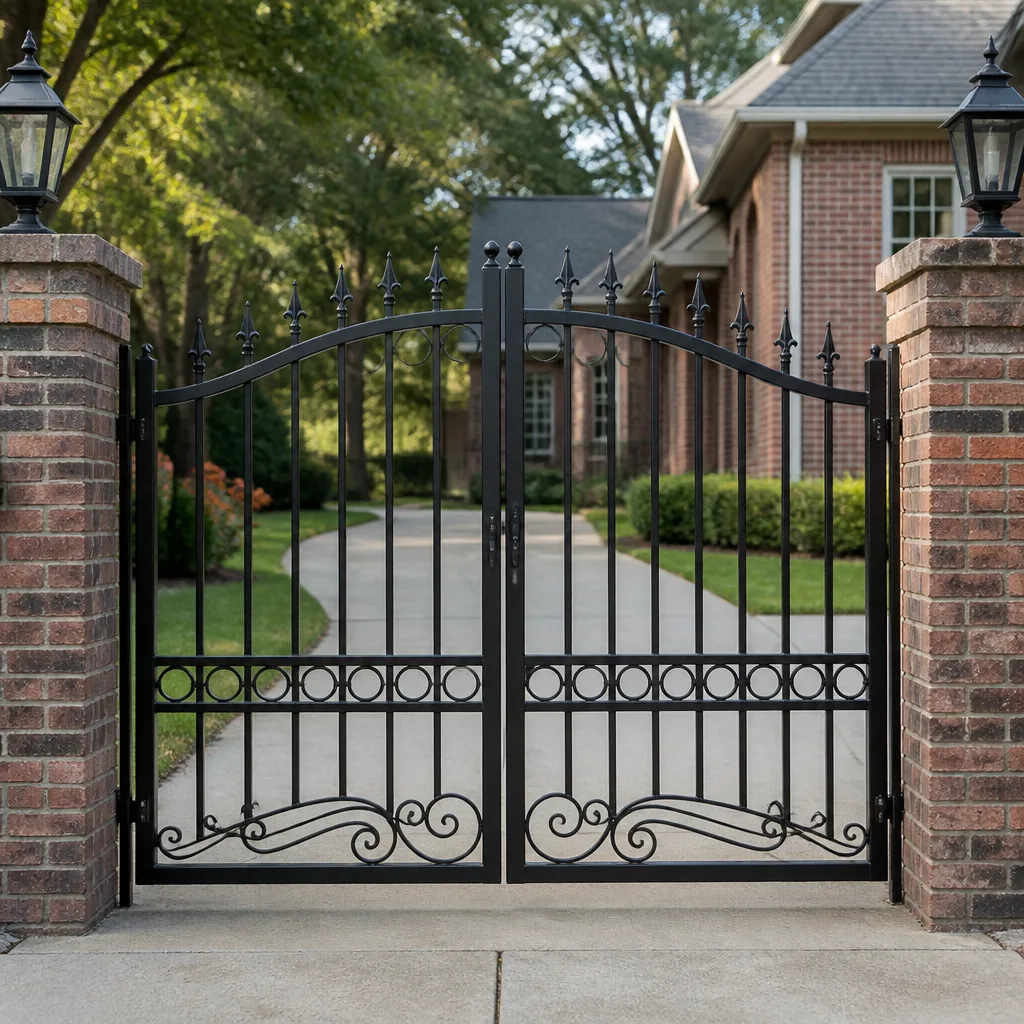
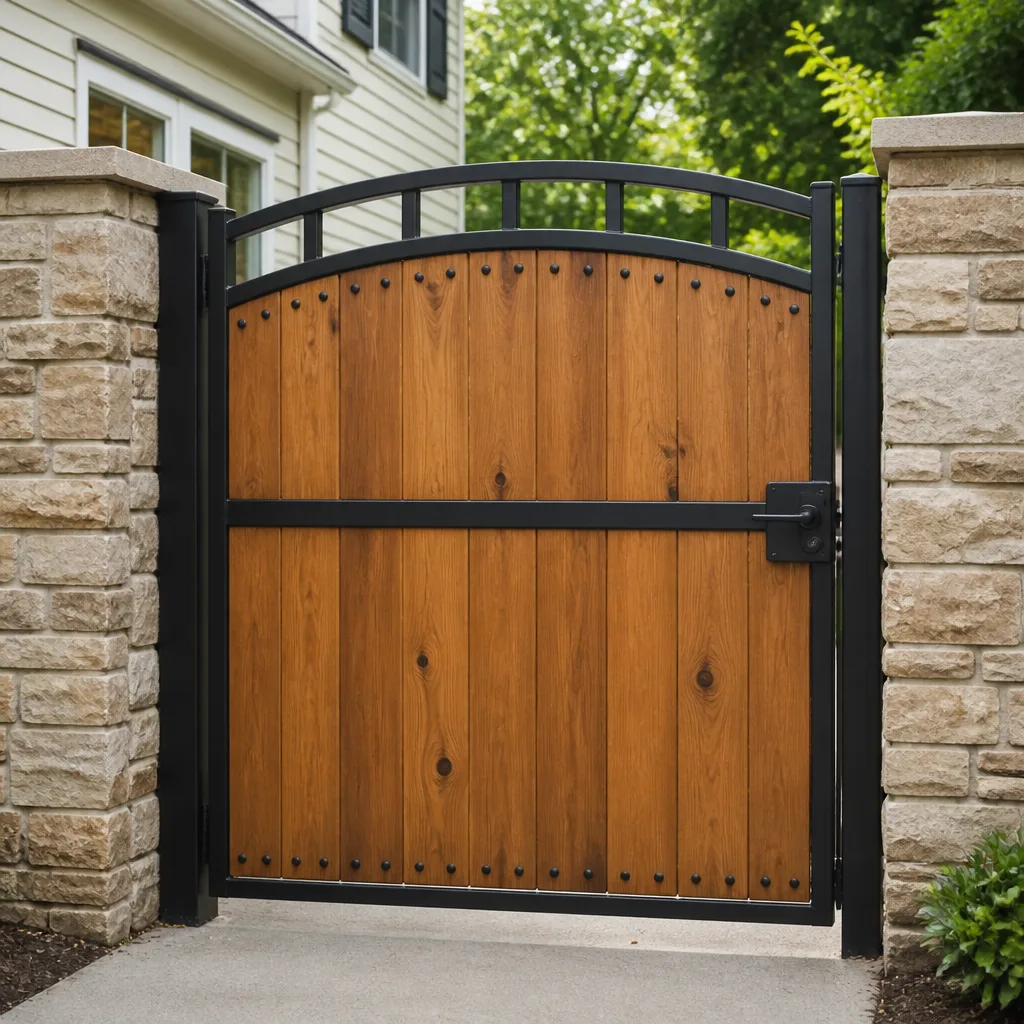
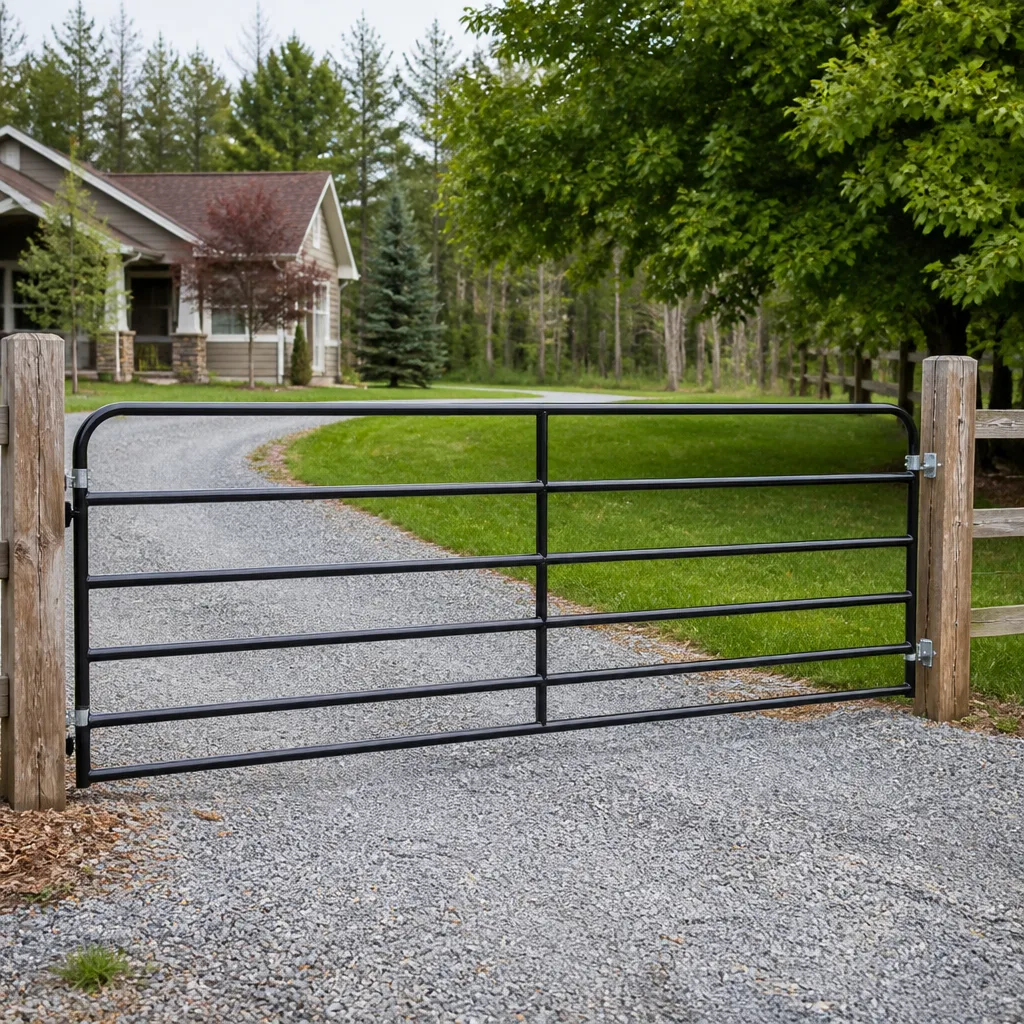
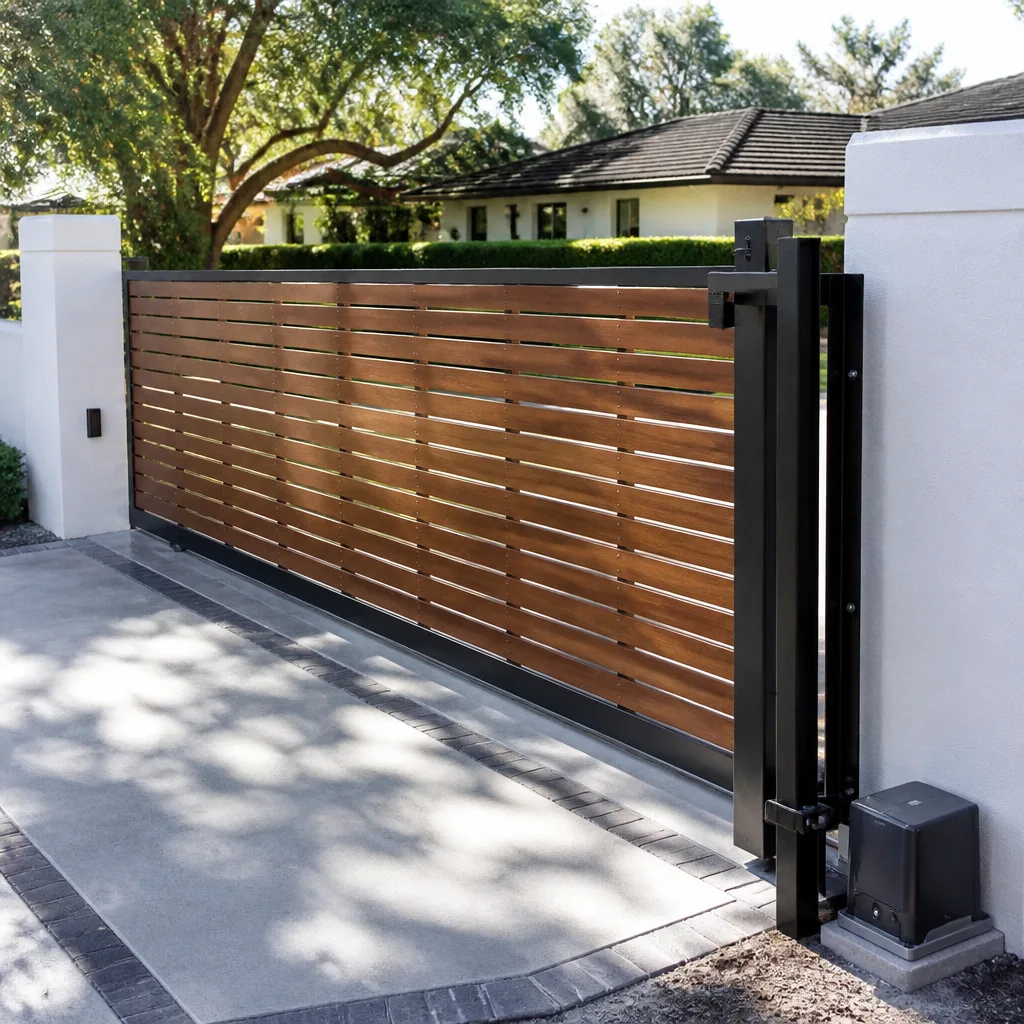
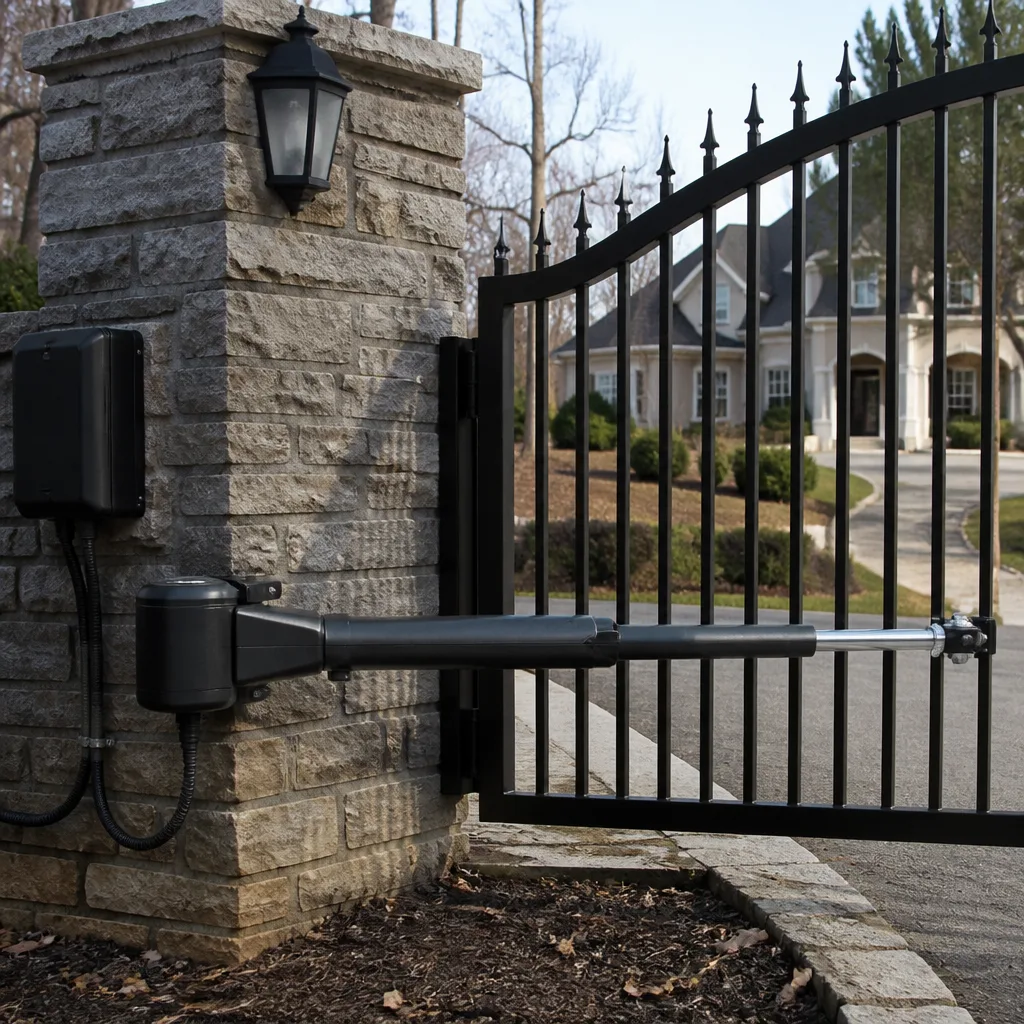
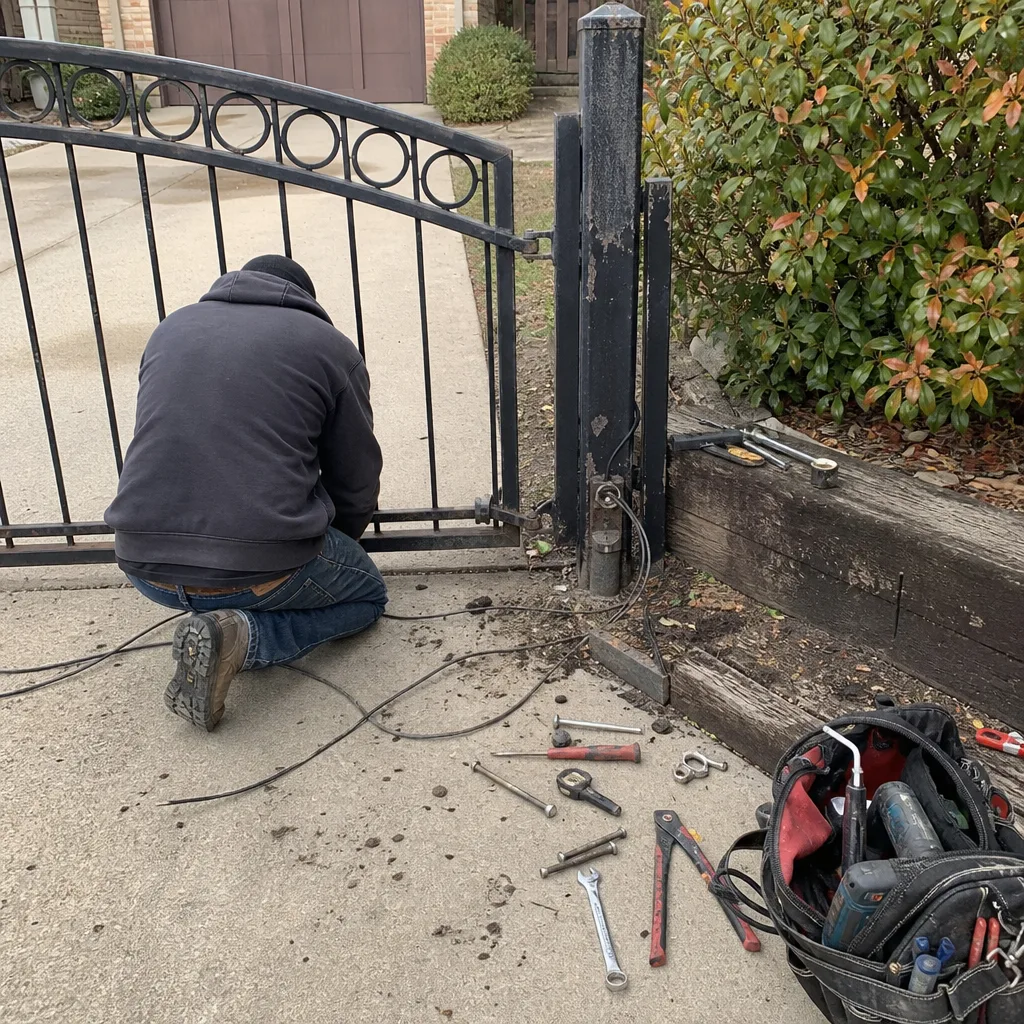 Before
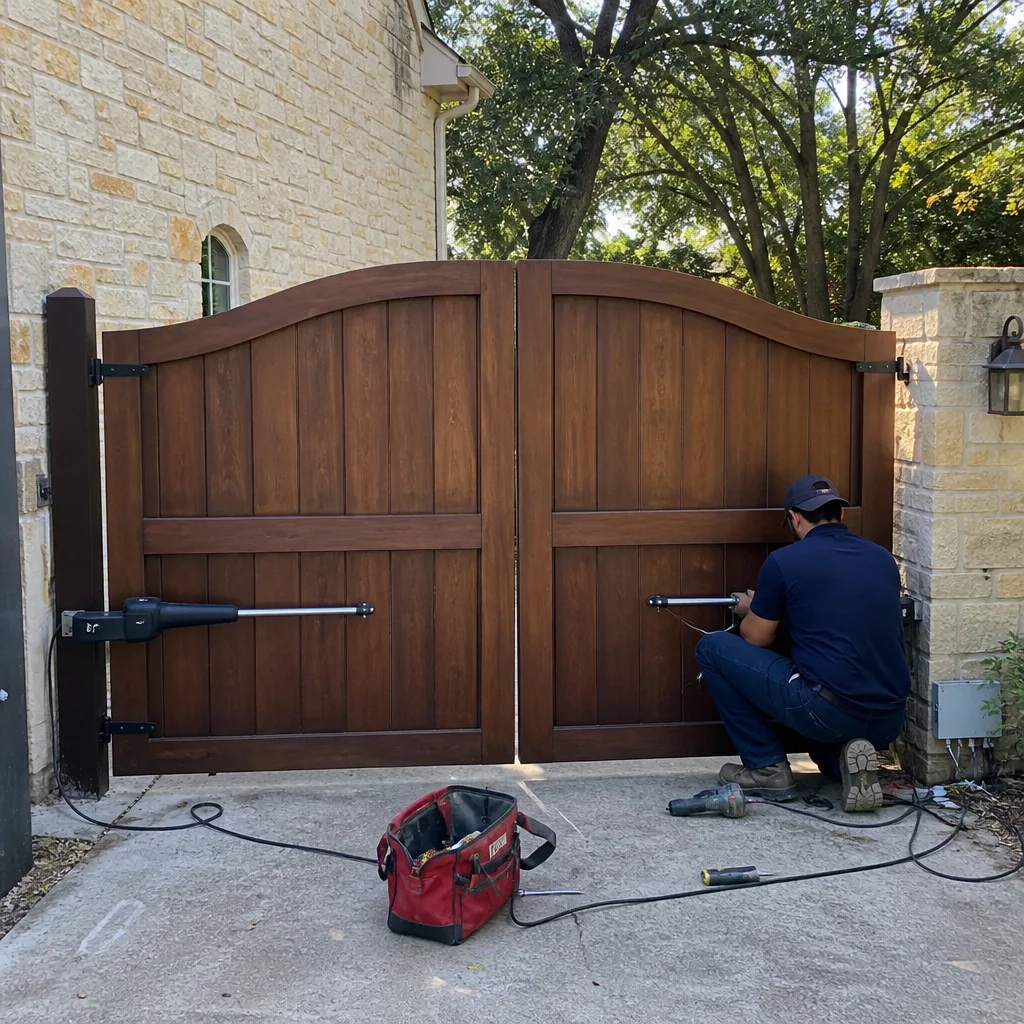 After
After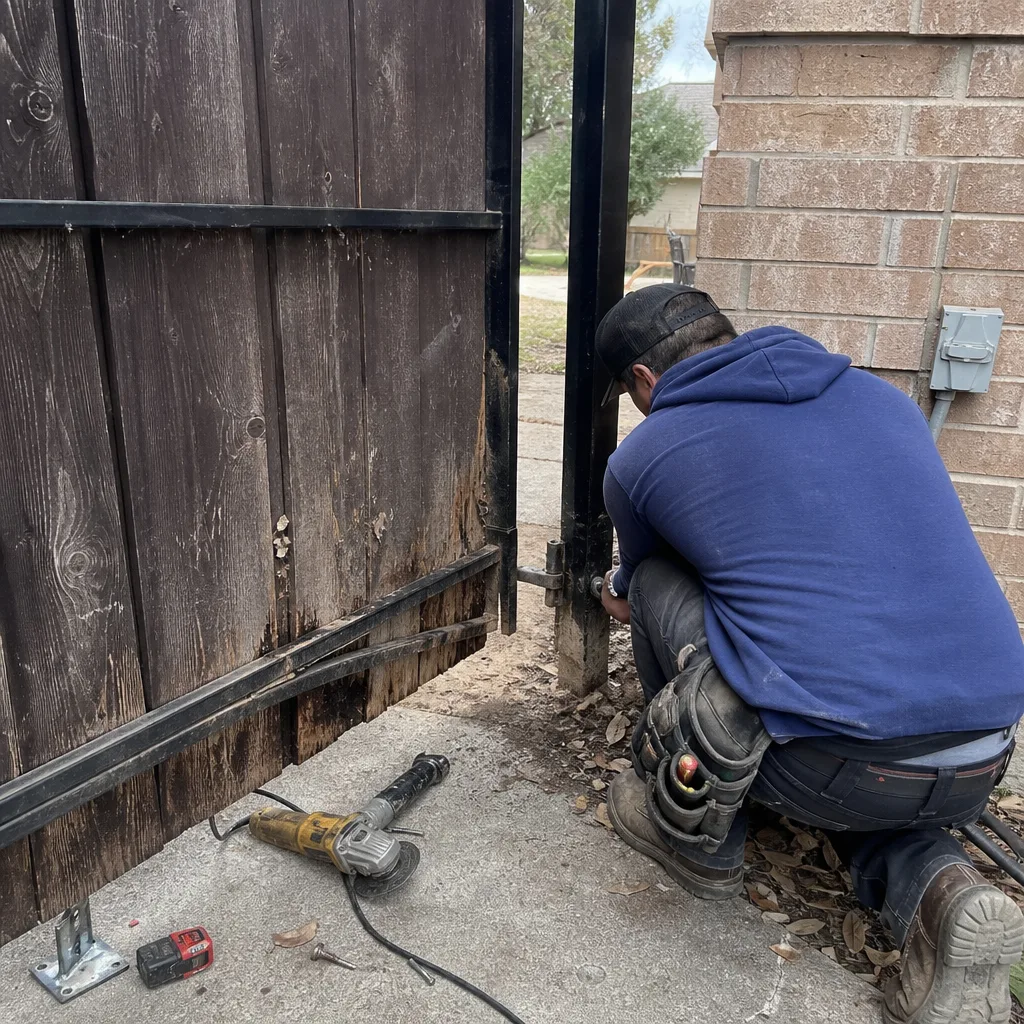 Before
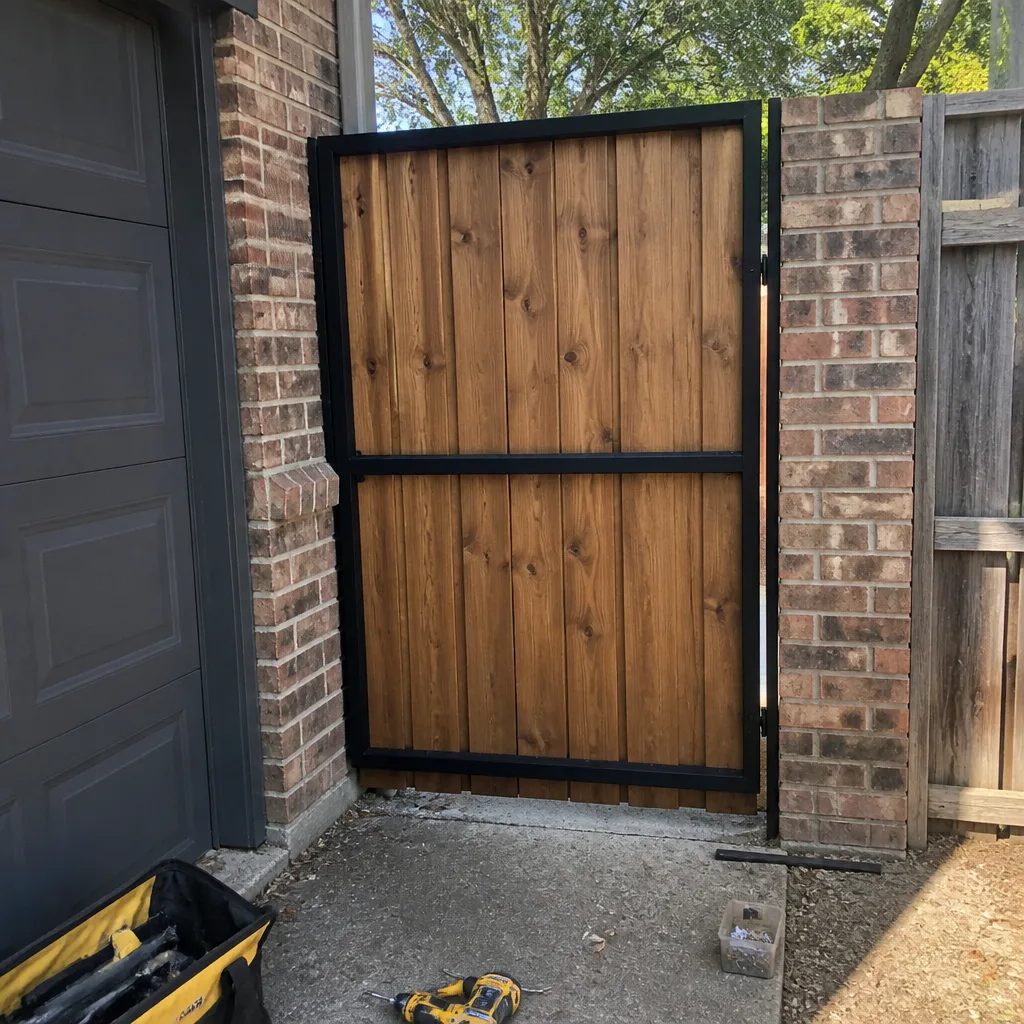 After
After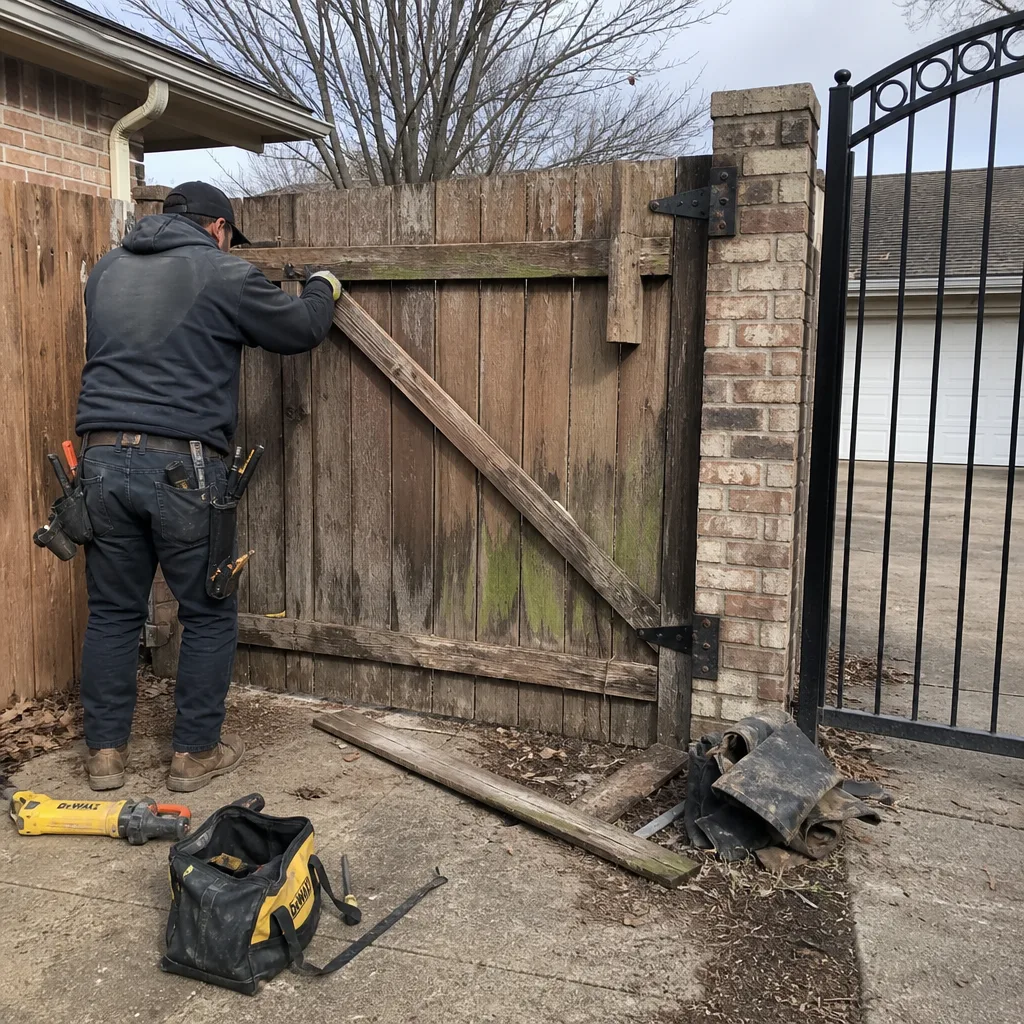 Before
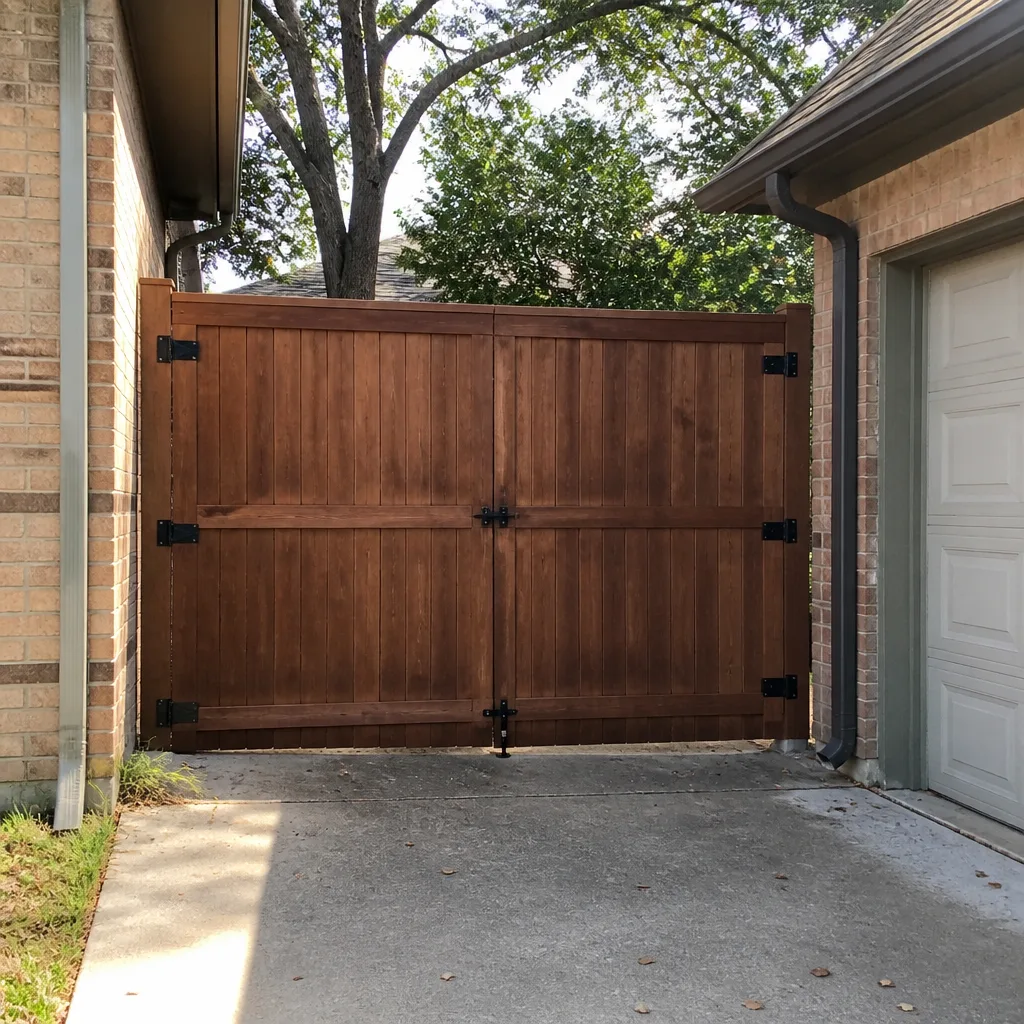 After
AfterThe Complete Guide to Gate Repair in Coppell
A gate that reopens on its own isn’t a sensor problem 60% of the time. It’s a hinge or a post issue that’s thrown the whole frame out of square, and every tech who “fixes the sensor” without checking that is just buying you another service call. This guide names the three root causes behind most gate failures in Coppell and walks through every repair category from post lean to circuit board failure. For more guides & resources, visit our blog. By the time you finish, you’ll know what you’re actually dealing with before anyone shows up in your driveway.
Quick Answer
Gate repair in Coppell typically costs $185 to $450 for most structural and mechanical fixes, with control board replacement running $300 to $800 depending on brand-see our Gate Repair Cost Breakdown: The Coppell Homeowner’s Reference for 2026 for full details. Most repairs take under two hours once the gate is diagnosed correctly. The fastest way to get an exact price is to call us at (903) 829-4499 and describe what the gate is doing.
Table of Contents
- The Three Root Causes Behind Every Gate Failure
- How to Read Your Gate’s Behavior as a Diagnostic Language
- Structural Repair: Posts, Hinges, and the Frame
- Mechanical Repair: Wheels, Rollers, Track, and Chain
- Electrical Repair: Boards, Motors, Sensors, and Remote Issues
- On-Site Welding vs. Full Replacement: How to Tell the Difference From the Street
- What a Legitimate Repair Warranty Actually Covers
- Common Mistakes to Avoid
- When to Call a Professional
- Frequently Asked Questions
The Three Root Causes Behind Every Gate Failure
Every gate problem in Coppell, whether it’s a sliding gate that grinds or a swing gate that drags on the driveway, comes down to one of three categories: structural, mechanical, or electrical. Structural means the posts, hinges, or frame are no longer where they were built to be. Mechanical means a moving part like a wheel, roller, chain, or gear has worn out. Electrical means power isn’t reaching the motor, the board isn’t sending the right signal, or a sensor is confused.
Here’s the part most homeowners never hear: misdiagnosing which category you’re in costs more than the actual repair. Change a circuit board on a gate whose post has tilted three degrees in the expansive clay soil common across Coppell and you’ve spent $500 to fix a symptom. The board will fail again because the gate is binding against the post every time it cycles. We see this pattern constantly in neighborhoods like Mockingbird Ridge and The Sound, where clay soil expands after spring rain and contracts through dry summers.
Why Coppell Conditions Accelerate All Three
Dallas County clay soil is brutal on gate posts. It swells when wet and shrinks when dry, which works a post loose over time the same way a tooth loosens in a gum. Summer heat cycling adds another layer. Metal expands in the 100-degree afternoons and contracts at night, and after enough cycles, weld points and bolt holes develop play that turns into sag. Then there’s HOA gate traffic volume. Coppell has a high concentration of gated communities, and a gate that cycles 80 times a day in a neighborhood like Cypress Waters wears out rollers, hinges, and circuit boards about four times faster than a single-home driveway gate.
Key Takeaways:
- Structural root cause: post lean, hinge play, frame out of square
- Mechanical root cause: worn wheels, rollers, chain stretch, gear failure
- Electrical root cause: board failure, motor capacitor, sensor misalignment, power supply
- Clay soil in Coppell drives structural failures; heat cycling drives mechanical wear; HOA traffic volume drives electrical and mechanical wear
How to Read Your Gate’s Behavior as a Diagnostic Language
Your gate tells you what’s wrong before it fully quits. Dragging, reversing, grinding, sagging, hesitating, beeping without moving. Each behavior points to a different category, and knowing the difference saves you from paying someone to throw parts at the problem.
Start with the sound. A gate that grinds during movement is almost always mechanical: a roller seizing up, a chain running dry, a wheel bearing gone. A gate that hums but doesn’t move is electrical or mechanical: the motor is getting power but something is bound or the capacitor has failed. A gate that moves fine sometimes and dead other times is electrical: board, limits, or a wiring connection that’s working loose from all that heat cycling.
- Watch where it binds. Walk the gate through a full cycle by hand if you can. Note where it catches.
- Look at the post before the gate. A gate sags in the hinge post, not in the middle. If the post leans, the gate hangs wrong no matter what else you do.
- Check the ground contact. Drag marks on concrete mean the gate has dropped. That’s structural or a failed wheel, not the motor.
- Listen at startup. A grunt at startup that smooths out could be a capacitor or a board issue on a motor system.
- Note the weather pattern. If problems spike after rain, suspect ground movement at the post. If problems spike in August heat, suspect thermal expansion at the hinge or rail.
One of the most useful diagnostic tests in Coppell is the frame check. Stand at the gate’s latch side and look down the frame line. If the top rail doesn’t line up with the bottom rail, the post has moved. Fix the panel without the post and you’ll fix it twice.
Mighty Mule gate openers in particular are everywhere in Coppell’s single-family neighborhoods, and their control boards are sensitive to voltage drops from older wiring loads. If a Mighty Mule or Ghost Controls unit starts beeping but won’t move, check the power source before replacing the board. That’s a free fix a lot of people pay $300 for.
Structural Repair: Posts, Hinges, and the Frame
Most structural problems begin underground. A square post set in cement that wasn’t wide enough or deep enough for clay soil will lean within a few seasons. In Coppell, we see post lean most often in gates built before 2010, when many installers set posts at 18 to 24 inches deep without recognizing how much this soil moves. A proper post for a heavy swing gate in this area needs to go 36 to 42 inches deep with a concrete footing wider than the post.
What structural repair actually requires depends on how far the post has moved.
- Minor lean under 5 degrees: Hinge adjustment or re-shimming. Often a one-hour fix if the post is still solid in the ground.
- Moderate lean with wobble: The post needs to be braced, re-plumbed, and re-set with additional concrete. Not a full rebuild in most cases.
- Severe lean or cracked footing: The post gets cut at ground level, removed from the footing, and a new post is set to the correct depth.
Here’s where on-site welding changes what’s possible. If the hinge tabs are worn or cracked, a shop that doesn’t weld will tell you the panel needs to come down and the whole assembly replaced. In our driveway, we can cut off the old hinge tab, weld a new one in place, re-hang the gate, and have it swinging square in an afternoon. That’s the difference between a $200 repair and a $1,200 replacement quote.
For anyone looking at gate repair in Coppell, the single biggest cost variable is whether the company diagnosis stops at the visible symptom or digs to the post. Ask whoever quotes the job what the post looks like below grade. If they haven’t checked it, they haven’t diagnosed anything.
Mechanical Repair: Wheels, Rollers, Track, and Chain
Mechanical parts are built to wear, and in Coppell’s heat they wear predictably. Sliding gate wheels flatten on the bottom over time. Roller bearings dry out and seize. Chain links stretch. These are normal wear points, not product failures, and the fix is usually straightforward: replace the wheel, clean or replace the bearing, tension the chain or swap the stretch section.
A dragging slide gate that leaves a mark across the driveway is the classic mechanical symptom. The gate has dropped because a wheel has worn flat or the track has shifted in the dirt. The motor is often fine. It’s working harder and harder against the drag until the capacitor burns out or the board trips a limit error.
- Inspect the wheel surfaces for flat spots or cracks.
- Check the track for debris or shifting at the joints.
- Lift the gate at the roller side to test for vertical play in the bearing.
- Run the gate and listen for ticking, which indicates chain stretch or a loose sprocket.
- Check all mounting bolts for looseness. Vibration loosens everything over time.
Chain-drive systems like most LiftMaster slide gate operators and FAAC swing gate arms benefit from an annual inspection. The chain gets lubricated, tensioned, and checked for stretch. In communities around Coppell where the gate moves all day long, chain components wear faster than the manual suggests, and replacement before failure keeps the whole system from going down at the worst possible time.
Electrical Repair: Boards, Motors, Sensors, and Remote Issues
Electrical issues are where home gate owners in Coppell lose the most money on misdiagnosis. A control board that isn’t the problem gets replaced. A sensor that’s working fine gets swapped. The actual issue, a loose ground wire or a power supply putting out 21 volts instead of 24, gets left in place and the whole cycle repeats in a month.
The most common electrical repairs we handle:
- Control board replacement: LiftMaster and Mighty Mule boards fail most often here, usually from voltage irregularities or heat. Replacement is the standard fix.
- Capacitor replacement: The motor hums but won’t start. A $40 part that gets misdiagnosed as a $400 board all the time.
- Sensor realignment: Photo eyes get nudged out of alignment by gate vibration or passing lawn equipment.
- Limit switch adjustment or replacement: The gate stops short or runs past the close point.
- Remote and receiver issues: Sometimes it’s the remote, sometimes the receiver, sometimes interference from a new LED floodlight or a neighbor’s changed system.
BFT and Viking operators show up regularly in larger Coppell HOA installations, and those boards are more expensive to replace. A BFT board runs $500 to $800 after labor. Before writing that check, we test the power supply under load and verify the motor’s draw. If the motor is pulling high amps because the gate is binding, changing the board without fixing the bind will cook the new board inside a year.
Safety note: gate motors carry live line voltage, and capacitors store charge even after power is disconnected. This is genuinely dangerous work if you don’t know how to discharge a capacitor properly. We don’t recommend opening a control box as a DIY project-read our DIY vs Professional Gate Repair: The Coppell Homeowner’s Decision Guide to understand the risks.
On-Site Welding vs. Full Replacement: How to Tell the Difference From the Street
On-site welding changes the economics of gate repair entirely. A company that welds can repair a cracked frame, reattach a broken hinge, rebuild a sagging panel, and add reinforcement plates without ever taking the gate off its post. A company that doesn’t weld has to remove the gate, haul it to a shop, or order a new panel, which turns a two-hour repair into a week-long project with a much bigger invoice.
From the street, you can make a rough call on which side of the line your gate falls.
- Weldable: Cracks in the frame at hinge points, broken hinge tabs, sagging top rail, bent pickets, broken latch brackets. All of these are on-site fixes if the metal itself is sound.
- Replaceable: Rust through more than 30% of the frame, damage that has distorted the entire panel geometry, or a gate that was built lightweight to begin with and has failed in multiple places. No weld fixes metal that isn’t there anymore.
Coppell’s heat makes weld points on older gates brittle faster than in cooler climates. That’s not a sign the gate was built wrong. It’s a sign the original construction didn’t account for thermal cycling. A good repair welds the crack and adds a reinforcement plate so the same stress path doesn’t crack again in the same spot.
If you’re comparing gate installation quotes against repair quotes, this is the key distinction. A repair with on-site welding is almost always the better long-term value when the gate has enough structural metal left to work with. A replacement is the right call when the repair would just be welding new metal onto a frame that’s already fatigued.
What a Legitimate Repair Warranty Actually Covers
“We stand behind our work” is the single most worthless sentence in the home service industry. It means nothing. It has no dates, no scope, no enforcement mechanism. When a gate company won’t put a time period in writing, they’re telling you they don’t plan to come back.
Here’s what a legitimate repair warranty should include in writing:
- A specific coverage period, usually 30, 60, or 90 days from the repair date.
- A clear statement of what’s covered: parts, labor, or both.
- A defined remedy: the company returns, re-repairs, and doesn’t charge you for doing it right.
- A named person or company, not just “the installer.”
Our approach is the 90-Day Done Right Promise. If the repair isn’t done right, we make it right. That’s stamped on every invoice in writing, and if something fails in that window, one call brings Hal back. No argument about whose fault it was, no requirement that you prove what caused the failure. It’s the oldest accountability there is: the name is on the shop, and the shop is down the road.
When you’re comparing quotes, ask what happens on day 60 if the gate starts acting up again. If the answer is vague, you have your answer. You want a written promise with a number and a name.
Common Mistakes to Avoid
- Chasing the symptom instead of the root cause. Replacing a sensor on a gate that’s out of square fixes nothing. The sensor will fault again because the gate isn’t closing true. In Coppell’s clay soil, structural root causes get passed off as electrical gremlins all the time.
- Skipping the post inspection. A gate sags in the hinge post, not in the middle. Any repair that doesn’t check the post below grade is a temporary patch.
- Replacing a board before checking power. Voltage drop from a failing power supply or a loose neutral can mimic a bad control board. The board isn’t the problem; the power feed is.
- Buying the cheapest remote from an online marketplace. Universal remotes that aren’t matched to the receiver frequency and protocol will fail intermittently and drive you crazy. Use the brand-matched remote or a quality universal with the right programming.
- Ignoring a gate that’s getting slower. A gate that moves slower every week is telling you a bearing or wheel is headed toward full seizure. Fix it before the strain burns out the motor.
- Accepting a verbal warranty. If the guarantee isn’t in writing with a specific time period, it doesn’t exist. Get it on the invoice.
- Over-tightening hinges to compensate for a leaning post. This pulls the gate out of line and transfers more stress to the post, making the lean worse. It’s a real fix people do that makes the problem bigger.
When to Call a Professional
Call a professional when the gate drags on the ground, when you see cracks at hinge points or along the frame, when the motor hums without moving, or when the gate reopens on its own after closing. These are signs of structural or mechanical failure that will get more expensive the longer they wait. Call when you smell hot electrical components near the control box, when a gate has come off its track, or when any post shows visible lean. Electrical work on gate motors is dangerous, and a gate that falls on someone is worse. Gatewood Fence & Gate offers free estimates in Coppell. Call (903) 829-4499 and describe what the gate is doing. We’ll tell you what category it’s in and what it likely costs before anyone drives out.
Frequently Asked Questions
Most gate repairs in Coppell cost between $185 and $450 for common structural and mechanical fixes, while control board replacement runs $300 to $800 depending on brand. Every job is quoted and agreed before any work starts, so there’s no surprise invoice at the door. Call (903) 829-4499 for a free estimate on your specific gate.
In most cases, yes. We keep common parts for LiftMaster, Mighty Mule, and FAAC systems on the truck, and most structural and mechanical repairs are done same-day when the post is still sound. Board replacements may take a day if we need to source a specific BFT or Viking unit. Call us at (903) 829-4499 and we’ll tell you what’s realistic for your situation.
Not usually. About 60% of the time, a gate that reopens on its own is catching on a hinge or post that’s moved out of square, triggering the obstruction detection. The sensor is doing its job. Show me the gate closing on its own and I’ll show you where it’s failing. We check the frame and post before we touch the sensors.
We’re certified to service nine major brands: LiftMaster, FAAC, BFT, Linear, Viking, Ghost Controls, DoorKing, Elite, and Mighty Mule. If your gate has a board or motor from any of these, we can diagnose and repair it without needing to call in a factory rep.
It covers the repair we performed, including parts and labor, for 90 days from the date on the invoice. If the same problem comes back in that window, we return and fix it at no charge. It’s written on every invoice, not buried in fine print.
No trip charge inside the county. You get the diagnosis and the quote without paying for the privilege of having us show up. We also offer $40 off any repair over $200 and a free second opinion on any written estimate from another company.
The Bottom Line
Gate Repair in Coppell comes down to diagnosis before anything else. If the post is leaning, no sensor swap or new control board will fix the gate. If the chain is stretched and the bearing is gone, the motor isn’t the problem. And if the power supply is weak, the board isn’t failing. The three root causes, structural, mechanical, and electrical, each have their own signature, and knowing how to read your gate’s behavior before you call anyone gives you the upper hand. Working with a repair-first shop that welds on site means you fix the gate where it hangs instead of paying to replace it. And a written guarantee with a real name behind it is the only kind worth having.
Written by Hal Gatewood, Owner at Gatewood Fence & Gate, serving Coppell since 2001.